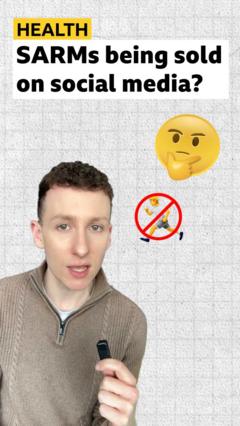
UK Anti-Doping researchers have uncovered widespread online marketing of SARMs, selective androgen receptor modulators, to young people in Britain. The organization's new research reveals that one in three people aged 16 to 25 encounter advertisements for these compounds weekly on social media platforms.
SARMs are synthetic drugs designed to mimic testosterone's effects on muscle and bone while theoretically avoiding some side effects of traditional anabolic steroids. They remain unapproved for human use in most countries, including the UK, where they're classified as unregulated research chemicals rather than licensed medications.
The UK Anti-Doping research exposes a troubling disconnect. These compounds circulate freely online despite lacking safety data in humans. Sellers typically market them as "research chemicals" or "not for human consumption" to skirt legal restrictions, yet they explicitly target fitness-focused young adults through social media targeting.
The concern runs deeper than simple regulatory violations. SARMs sold on unregulated platforms face zero quality control. Researchers testing black-market compounds have repeatedly found them mislabeled, contaminated, or containing entirely different substances than advertised. Users have no way to verify what they're actually consuming.
Side effects documented in limited human studies include liver toxicity, cardiovascular strain, and hormonal disruption. Long-term effects remain unknown because rigorous human trials have never been completed. Young people whose bodies are still developing face particular risk from compounds that manipulate hormone systems.
The research highlights how social media algorithms inadvertently amplify fitness marketing. A teenager interested in bodybuilding quickly encounters SARM advertisements alongside legitimate fitness content, making dangerous drugs appear normalized within fitness communities.
UK Anti-Doping's findings suggest the problem demands action beyond individual awareness. Platform accountability, stricter enforcement against sellers, and age-gated restrictions on performance-enhancing drug advertising could reduce exposure.