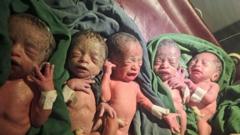
A 35-year-old Ethiopian woman delivered quintuplets after twelve years of infertility, an outcome she describes as an answered prayer. The birth of five children represents an extraordinarily rare natural occurrence, with spontaneous quintuplets estimated to happen in roughly one in 60 million pregnancies globally.
The woman's journey reflects the emotional toll of prolonged infertility. After more than a decade of unsuccessful attempts to conceive, she expressed overwhelming joy at delivering all five infants. She attributed the outcome to prayer and faith, describing herself as "blessed with five at once."
Multiple births at this magnitude carry substantial medical complexity. Pregnancies involving five fetuses demand intensive prenatal monitoring, specialized obstetric care, and careful nutritional management to support healthy development of all babies. The risks increase significantly compared to singleton pregnancies, including higher rates of preterm delivery, low birth weight, and complications for the mother during pregnancy and labor.
The BBC Health report highlights both the medical rarity and the emotional dimensions of this family's experience. Advanced maternal age, typically defined as 35 and older, combined with natural conception of quintuplets, makes this case particularly noteworthy from a clinical perspective. Most quintuplet pregnancies result from assisted reproductive technologies like in vitro fertilization or fertility drugs that stimulate ovulation, which increase the likelihood of hyperovulation.
The birth underscores the unpredictability of human reproduction and the profound desire many individuals experience to have children. For this woman and her family, a dozen years of hoping concludes with an exceptional outcome. Healthcare providers involved in such rare cases gain valuable experience managing the complexities of extreme multiple births, contributing to medical knowledge that benefits future patients facing similar circumstances.