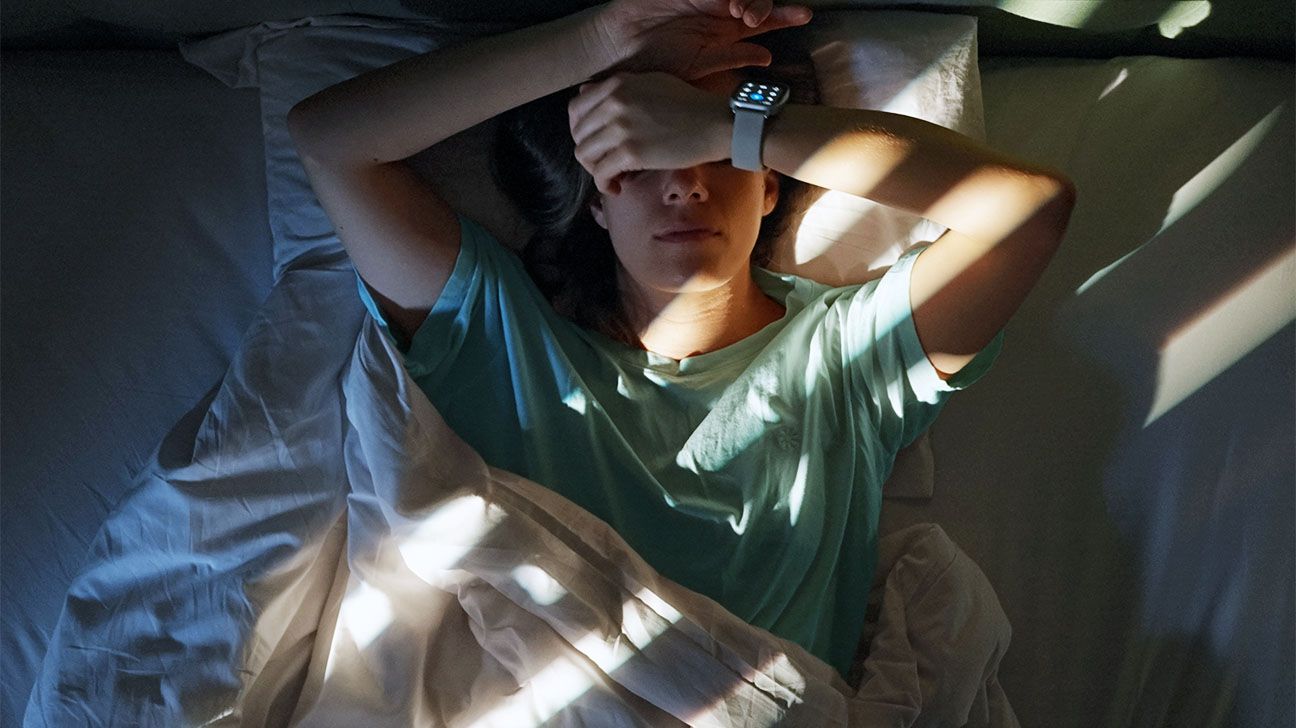
# Tracking Your Sleep Could Backfire If You Have Insomnia
Sleep tracking apps and wearables promise insight into your nighttime patterns. For people with insomnia, this surveillance can worsen the problem.
The phenomenon has a name: orthosomnia. Sleep psychologists use this term to describe the anxiety that develops when people obsess over sleep metrics and data. People with insomnia become hyperaware of how poorly they're sleeping, which paradoxically makes sleep harder to achieve.
Here's the mechanism. Your nervous system responds to perceived threat with activation. When you check your smartwatch at 2 a.m. and see that your deep sleep percentage is dangerously low, your body interprets this as a problem. Your heart rate elevates. Cortisol releases. Sleep becomes even more elusive. The data itself becomes the stressor.
Sleep specialists see this regularly in clinical practice. The constant monitoring creates a feedback loop. You track your sleep quality. You see the numbers are bad. Anxiety spikes. Sleep quality worsens. You track again. The cycle intensifies.
For people without sleep disorders, tracking occasionally offers useful information about sleep architecture and patterns. For those with insomnia, the practice often backfires.
Sleep medicine experts recommend a different approach. Rather than chasing numbers, people with insomnia benefit from cognitive behavioral therapy for insomnia, known as CBT-I. This evidence-based treatment addresses the thoughts and behaviors that fuel sleeplessness. A therapist helps patients unlearn the anxiety association with bedtime and rebuild confidence in their ability to sleep.
If you have insomnia and use sleep trackers, consider putting the device away. Silence the notifications. Stop checking the data before bed. Your sleep quality may improve simply by reducing the monitoring-induced stress.
The irony of sleep technology is that the pursuit