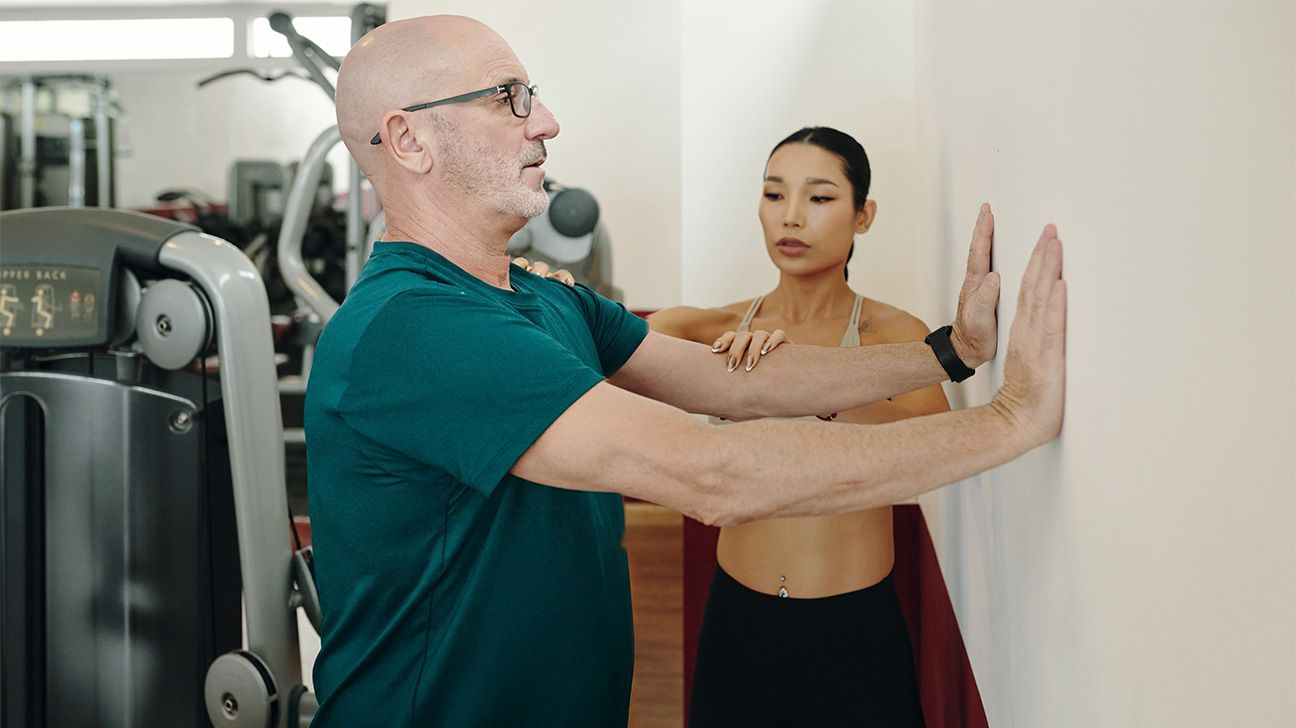
# Eccentric Exercise Builds Muscle Efficiently, Research Shows
Eccentric exercise, where you slowly lower weight rather than lifting it, produces muscle growth with less effort than traditional strength training. This method focuses on the lengthening phase of movement, creating tension in muscles during their extension.
Research demonstrates that eccentric training triggers significant muscle adaptation. When you perform a wall push-up or lower a dumbbell slowly, your muscles experience greater force relative to the work they produce. Studies show this approach generates muscle damage and repair responses comparable to heavier conventional lifting, but with reduced joint stress and fatigue.
The mechanics work like this. During eccentric movements, muscles lengthen under tension. This lengthening creates microscopic tears that signal your body to rebuild muscle fibers stronger and larger. You achieve this response using lighter loads than concentric training, where muscles shorten as they lift weight.
For older adults and people recovering from injury, eccentric exercise offers particular benefit. Practitioners report that clients build strength safely because eccentric movements allow precise control and lower injury risk. The approach suits people with limited time, since eccentric workouts typically require fewer sets to achieve results.
A wall push-up exemplifies this principle. Rather than pressing against the wall, you lean into it and slowly push back to starting position. The eccentric phase, where you resist gravity while extending your arm, delivers the training stimulus. This single-phase focus eliminates the explosive lifting component many find taxing.
Implementing eccentric training requires deliberate pacing. Experts recommend taking three to five seconds on the lowering phase of any movement. You can apply this to standard exercises like squats, pull-ups, or rows. Starting with lighter weight than you'd normally use prevents overload while your body adapts.
Eccentric exercise works best as part of a balanced program. Pairing it with traditional strength training and proper