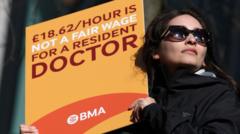
# Doctors' Strikes Show Unexpected Silver Linings, Though Long-Term Viability Remains Unclear
Hospital trusts across England report unexpected improvements following recent doctor strikes. Shorter patient wait times, faster clinical decision-making, and calmer hospital environments have emerged as byproducts of reduced staffing levels during industrial action.
The paradox reveals itself in the operational data. When fewer doctors work shifts, hospital systems operate under constraint. This forces prioritization. Urgent cases receive faster attention. Non-essential procedures get postponed. The result: clearer pathways for critical patients and less chaotic working conditions for remaining staff.
Several NHS trusts shared observations with the BBC documenting these changes. Staff report reduced corridor congestion and fewer bottlenecks in patient flow. Clinical teams make decisions more quickly when overwhelmed schedules no longer consume their day. The breathing room created by reduced patient volumes allows doctors to focus on the most pressing cases first.
Yet this efficiency comes at a genuine cost. Patients awaiting elective surgery face extended delays. Diagnostic appointments pile up. The improvements exist only because the system has contracted to handle less volume, not because underlying infrastructure improved.
The sustainability question looms large. Strike-induced benefits depend entirely on crisis conditions that nobody would willingly maintain long-term. Hospital trusts cannot function indefinitely on skeleton crews. Patient backlogs eventually collapse clinical services if stretched too far.
What the strikes reveal, however, offers value. The data suggests NHS capacity problems stem partly from systemic bloat rather than pure resource shortage. Better triage protocols, streamlined decision-making, and prioritization frameworks could preserve some observed improvements without relying on strikes.
The real challenge involves translating temporary crisis efficiency into permanent structural change. Implementing the organizational lessons from strike periods requires deliberate policy work and investment. Hospital administrators now possess evidence that different operational approaches yield results. Converting