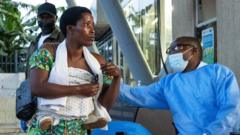
The Ebola outbreak unfolding in central Africa is spreading more rapidly than initial reports suggest, according to a World Health Organization doctor cited by BBC Health. While official case counts number in the hundreds, experts believe the true number of infections could be substantially higher.
The discrepancy between confirmed and suspected cases reflects a common challenge in outbreak response: limited laboratory capacity, delayed reporting from remote regions, and patients who never reach medical facilities. Dr. Jean-Marie Okwo-Bele, who has worked with the WHO on disease outbreak response, emphasizes that early case detection remains critical for containing viral hemorrhagic fevers.
Ebola spreads through direct contact with blood or body fluids of infected individuals or animals. The virus kills between 25 to 90 percent of those infected, depending on the strain. Without rapid isolation of cases and careful infection control, transmission chains accelerate through healthcare settings and community contacts.
Central Africa's healthcare infrastructure challenges compound the problem. Many regions lack adequate testing labs, trained epidemiologists, and isolation wards. Patients may travel between villages before symptoms appear or seek traditional healers instead of clinics, creating undetected transmission pathways.
The WHO typically responds by deploying surveillance teams to identify cases, training local health workers on infection control, and establishing isolation centers. Contact tracing becomes exponentially harder when suspected cases exceed confirmed ones, allowing the virus to spread silently through populations.
This gap between known and actual cases underscores why early warning systems matter. Countries that invest in routine disease surveillance networks and laboratory infrastructure catch outbreaks sooner, when containment remains feasible. The situation in central Africa demonstrates how quickly gaps in health systems create downstream public health crises.