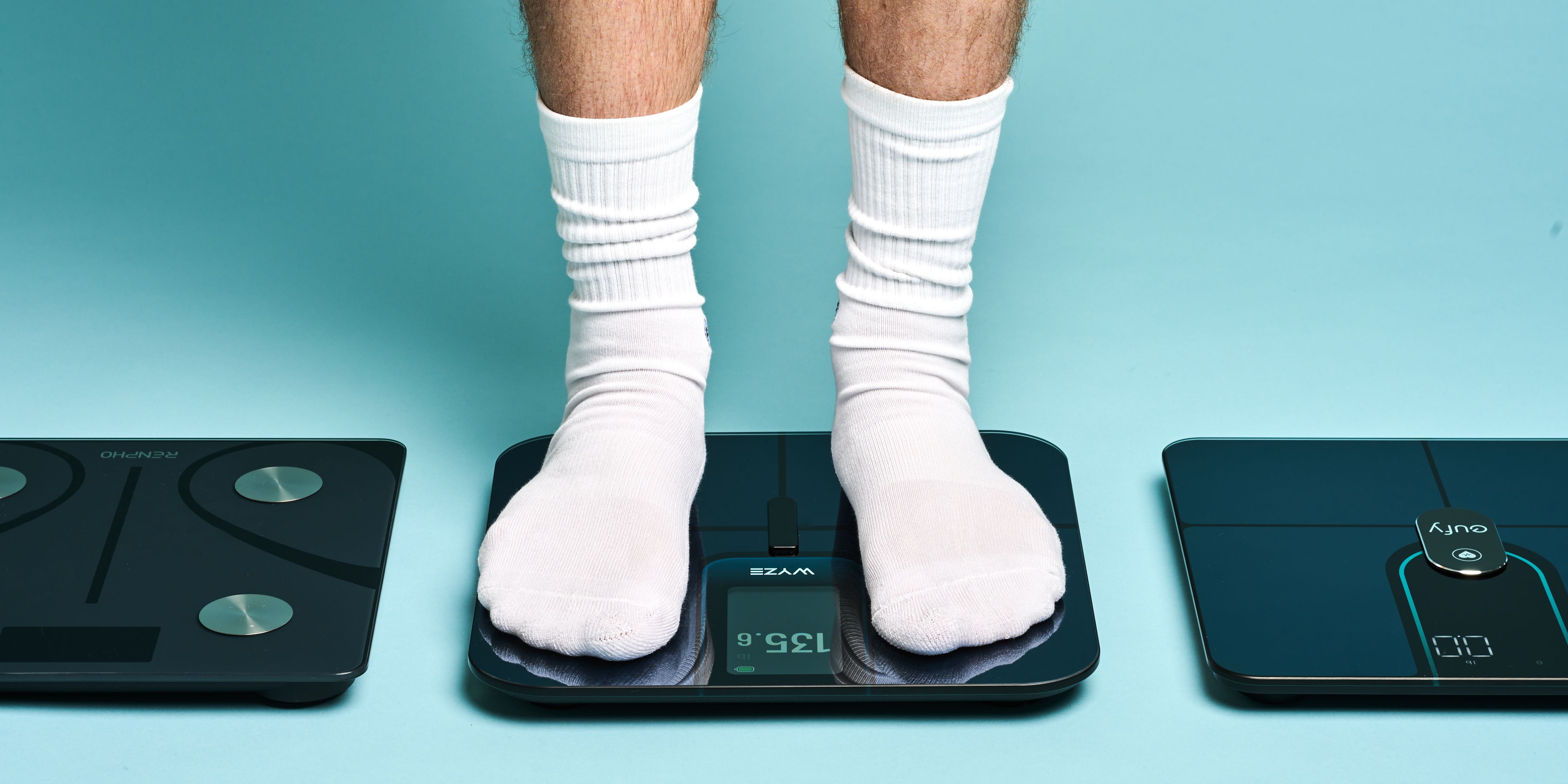
# The 6 Best Smart Scales for Your Home
Smart scales have become standard tools for people tracking body composition and fitness progress. Unlike traditional bathroom scales, these devices measure more than weight. They provide body fat percentage, muscle mass, bone density, and water retention data through bioelectrical impedance analysis.
The technology works by sending a small electrical current through your body to estimate tissue composition. This method offers reasonable accuracy for tracking trends over time, though individual measurements can vary based on hydration status, meal timing, and other factors.
Smart scales sync with smartphone apps and fitness trackers, creating a unified picture of your health metrics. This integration helps users identify patterns. Someone might notice their weight stays stable while muscle mass increases, indicating effective strength training. Another person might spot water retention patterns tied to their menstrual cycle or salt intake.
Men's Health reviewed six top models, evaluating them on accuracy, app functionality, design, and price. The selection spans budget-friendly options under $50 and premium models exceeding $300. Budget scales typically measure weight and basic body composition. Mid-range options add features like individual user profiles and cloud storage. High-end models include WiFi connectivity and integration with popular fitness apps like Apple Health and Google Fit.
Accuracy matters most when using smart scales. Studies show bioelectrical impedance analysis works best for tracking personal progress rather than achieving clinical accuracy. Your baseline measurement matters more than individual readings. Consistent measurement timing, ideally each morning before eating or exercising, improves reliability.
Smart scales work best as part of a broader fitness routine. The data becomes useful when combined with strength training logs, cardio records, and nutrition tracking. Someone using a smart scale alone without other context may become discouraged by normal daily fluctuations.
Choosing the right smart scale depends on your goals and budget. If you want simple weight tracking, a basic model suffices. If