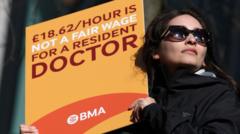
# Doctors' Strikes Show Unexpected Operational Benefits, Though Sustainability Questions Remain
When doctors strike, hospitals often report unexpected improvements in patient care efficiency. Several UK hospital trusts told the BBC that previous industrial action led to shorter wait times, faster clinical decision-making, and less chaotic corridors.
The phenomenon appears counterintuitive. Fewer staff members on duty typically create bottlenecks. Yet some trusts discovered that strikes forced operational rethinking. With reduced staffing, hospitals prioritized urgent cases ruthlessly, eliminated non-essential procedures, and streamlined communication. Staff worked with heightened focus. These conditions sometimes persisted even after strikes ended, creating temporary gains in throughput.
"We saw faster decisions because we had to," one trust administrator explained to the BBC. Clinicians concentrated on critical patients first. Administrative bloat diminished. Corridors became calmer because non-urgent work simply stopped.
However, this efficiency gain reveals systemic problems rather than solutions. Normal operations require more staff than the minimum needed to handle emergencies. Stretched teams experience burnout. Quality of care suffers when doctors work at crisis capacity continuously. The gains from strikes represent not genuine improvements but rather what hospitals could achieve with adequate staffing and lean processes.
The sustainability question cuts both ways. Hospitals cannot maintain strike-level efficiency without the efficiency gains disappearing after normal staffing resumes. Conversely, the improvements suggest hospitals operate with unnecessary inefficiency during normal times, raising questions about resource allocation and management.
For patients, the message is mixed. Short-term efficiency during strikes might mean faster diagnosis for emergencies. But the underlying staffing crisis means those same patients face chronic delays once normal operations resume. The real insight is that hospitals have optimization potential they currently ignore.
Doctors strike over pay, working conditions, and staffing levels. The operational improvements documented by these trusts argue that better