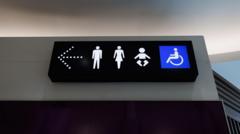
# UK Implements Biological Sex-Based Facility Access Guidance
The UK government published official guidance Thursday requiring toilets and changing rooms to be designated based on biological sex, following a landmark Supreme Court ruling from last year. The guidance applies to schools, workplaces, and public facilities across England, Scotland, and Wales.
The ruling centered on sex-based protections under the Equality Act 2010, which permits single-sex spaces to exclude people based on biological sex. The Supreme Court's decision clarified that organizations can legally maintain separate facilities for men and women without violating discrimination laws, provided they offer reasonable alternative access.
Health officials framed the guidance as balancing multiple legal obligations. Organizations must comply with sex equality protections while also meeting duties under the Equality Act 2010 to accommodate transgender and non-binary people. The guidance notes that single-sex spaces serve legitimate purposes, including privacy, safety, and dignity for all users.
The framework allows facilities some flexibility. Organizations can install additional facilities, create accessible alternatives, or designate certain times for different groups to use shared spaces. Schools received specific direction to consider the needs of both pupils and staff when making decisions.
The guidance sparked debate among advocacy groups. Some organizations supporting transgender rights expressed concern about access restrictions, while groups focused on sex-based protections welcomed the clarity. Unions representing teachers and healthcare workers had previously called for definitive guidance after years of confusion about their legal obligations.
The Department for Health and Social Care emphasized that implementation should respect everyone's dignity. Facilities must communicate policies clearly to users and handle access requests sensitively. Organizations retain responsibility for individual assessments where circumstances warrant exceptions or accommodations.
The ruling represents one of the most significant legal clarifications on sex-based spaces in recent years. Implementation varies across sectors, with schools, hospitals, gyms, and workplaces developing their own approaches within the legal framework established by the Supreme Court