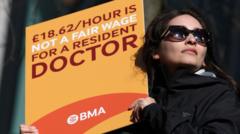
# Doctors' Strikes Show Mixed Outcomes on Hospital Performance
Hospital administrators across the UK report an unexpected phenomenon following doctors' strikes: shorter patient wait times, faster clinical decisions, and reduced chaos in corridors. Some hospital trusts have shared these observations with the BBC, suggesting that work stoppages by physicians may inadvertently streamline certain aspects of care delivery.
The paradox emerges from operational changes that occur when fewer doctors work. With reduced staff, hospitals reportedly prioritize cases more aggressively and make treatment decisions faster. One explanation lies in reduced administrative burden. During normal operations, clinicians often navigate bureaucratic layers that slow down patient flow. When strikes force simplified workflows, some clinical processes accelerate.
Shorter waits appear linked to triage efficiency. With fewer available slots, hospitals must see only urgent cases, eliminating delays for non-critical appointments. Faster decisions reflect necessity rather than improved resources. Doctors working strikes handle only essential matters, removing the backlog of routine consultations that typically lengthens decision-making timelines.
The "calmer corridors" observation points to reduced congestion. Emergency departments become less crowded when only acute emergencies receive attention. This creates a less chaotic environment, though it comes at the cost of cancelled routine procedures and delayed non-urgent care.
However, these benefits appear temporary and unsustainable. Hospital trusts acknowledge the improvements last only during strike periods. Once normal operations resume, the efficiency gains evaporate. The underlying staffing shortages, bureaucratic systems, and overcapacity persist.
More fundamentally, these apparent benefits mask a troubling reality. Faster decisions driven by workforce reduction reflect crisis management, not improved care. Patients with non-urgent conditions experience delayed treatment. The calmer environment comes from simply turning people away.
Experts recognize the striking pattern: temporary operational efficiency during reduced service delivery does not translate to systemic improvement