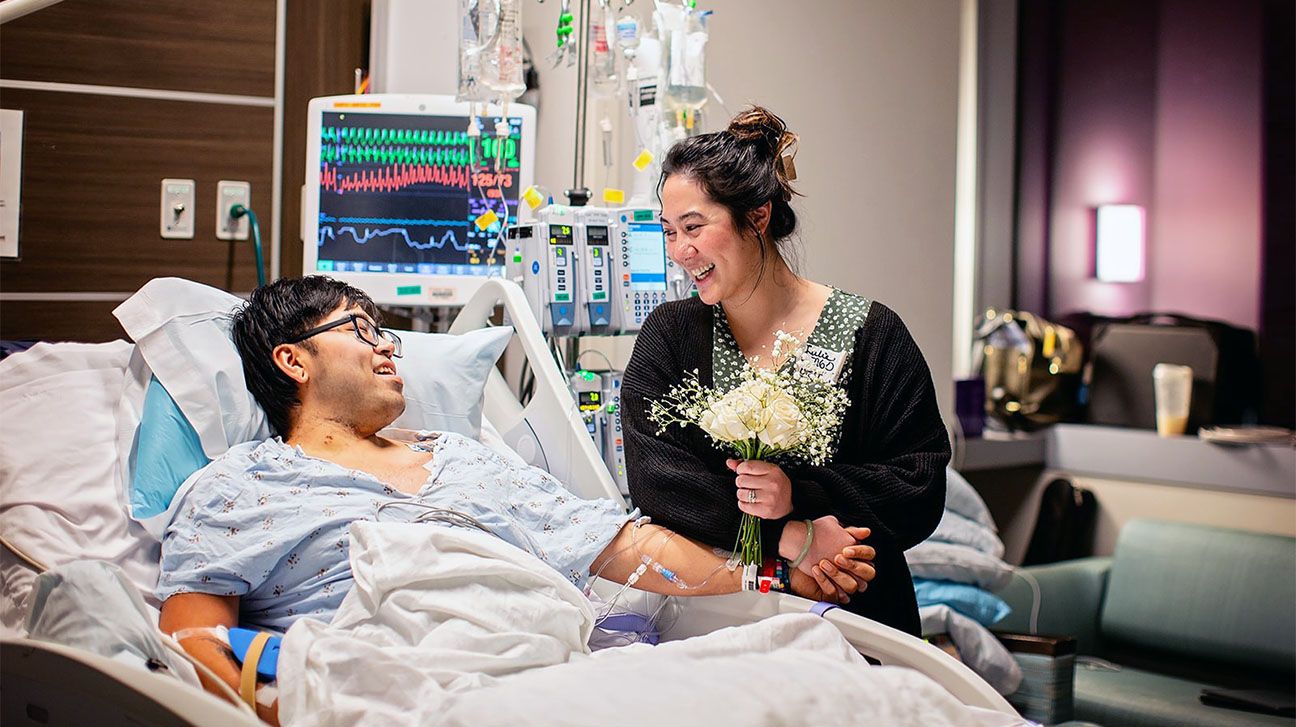
Daniel Phan faced a choice that forced clarity. His heart was failing. Surgery loomed days away. He and his girlfriend Julia decided they wouldn't wait for the operating room, the recovery period, the distant future. They got married in the ICU.
Phan's decision reflects something doctors increasingly recognize: emotional connection matters in critical illness. The stress of heart failure, the uncertainty before major surgery, the fear of what comes next—these shape outcomes. Julia's presence as his wife, not just his girlfriend, became more than symbolic. It became medical context.
Heart failure affects roughly 6.7 million American adults, according to the CDC. It develops when the heart pumps blood less effectively. Causes range from coronary artery disease to high blood pressure to cardiomyopathy. Some patients require transplants. Others benefit from mechanical support devices or surgical repair. The timeline matters. Waiting changes prognosis.
Research on social support in critical care consistently shows that strong relationships improve outcomes. A 2019 study in JAMA Internal Medicine found that patients with robust social connections experienced fewer complications and shorter hospital stays. Marriage specifically carries documented health benefits—lower mortality rates, better recovery after cardiac events, reduced inflammation.
But the benefits extend beyond the measurable. When patients face life-threatening illness, their psychological state influences healing. Anxiety increases cortisol. Fear accelerates heart rate. Certainty and commitment—the anchors that marriage provides—counteract these physiological stressors.
Phan's surgery went forward as planned. He recovered. The couple's decision to marry before his procedure represented something urgent and honest. They refused to postpone life while waiting for health to return. Instead, they created a moment of hope and commitment within the illness itself.
The ICU wedding story challenges how we think about medical crisis. Hospitals typically separate emotional life from clinical care, treating them