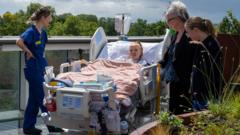
King's College Hospital in London has opened the first rooftop intensive care unit, marking an experiment in how outdoor environments affect critically ill patients.
The ward sits atop the hospital's main building and monitors patients who might otherwise spend weeks indoors on traditional ICU wards. Researchers will track whether exposure to natural light, fresh air, and outdoor views accelerates recovery for people recovering from serious illness.
The initiative responds to growing evidence that environmental factors shape medical outcomes. Studies on hospital design have shown that views of nature reduce patient stress, lower blood pressure, and decrease pain perception. A 2005 study published in *Science* found that surgery patients with window views of trees recovered faster and needed less pain medication than those facing brick walls.
The rooftop ward combines standard intensive care monitoring with outdoor space. Patients remain connected to life support and medical equipment while experiencing daylight and fresh air. The setup allows healthcare teams to deliver critical care without isolating patients from natural environments.
Dr. Sian Maslin, a consultant at King's College Hospital, noted that ICU patients often describe feeling disconnected from normal life. "I forgot what it feels like to be outside," one patient said after being moved to the rooftop ward.
The hospital will collect data on patient outcomes including recovery speed, pain levels, anxiety, and medication requirements. Results could reshape how hospitals design intensive care units globally.
This approach builds on evidence from environmental psychology. Research shows that even brief nature exposure reduces cortisol levels and promotes healing. For critically ill patients who typically spend 24 hours under artificial lighting in enclosed spaces, rooftop access could provide measurable therapeutic benefit.
The trial represents a practical application of what researchers already understand. Nature exposure works. The rooftop ward simply removes barriers that traditionally kept the most vulnerable patients indoors.