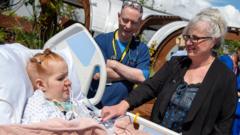
King's College Hospital in London has opened an intensive care ward on its rooftop, marking an unusual experiment in patient recovery. The outdoor space allows critically ill patients access to fresh air, natural light, and views of the surrounding city during their hospital stays.
The rooftop ward monitors how exposure to outdoor environments affects recovery outcomes in intensive care patients. Staff will track whether time outside influences healing, mental health, and overall wellbeing compared to traditional indoor ICU settings.
The setup addresses a real gap in critical care. Patients in standard intensive care units spend weeks or months in climate-controlled rooms with artificial lighting, separated from natural cycles. This isolation can contribute to delirium, a common complication in ICU patients marked by confusion, hallucinations, and disorientation. Research from major medical centers shows delirium affects up to 80 percent of mechanically ventilated patients and correlates with longer hospital stays and worse outcomes.
Natural light exposure regulates circadian rhythms, the body's internal clock that governs sleep, hormone release, and immune function. Studies on hospital design have found that access to daylight and outdoor views reduces patient stress, improves sleep quality, and can shorten recovery times. A landmark study in critical care showed that patients receiving light therapy had fewer delirium episodes and shorter ICU stays than control groups.
The rooftop ward represents an attempt to translate this evidence into practice for the most vulnerable patients. Staff carefully manage which patients can safely access the space, with considerations for medical equipment, weather conditions, and individual clinical stability. Patients who previously spent entire ICU stays indoors now have the option to spend time outside while remaining under continuous monitoring.
This initiative reflects growing recognition that ICU design matters. Beyond the direct benefits to patients, outdoor time may reduce burnout among healthcare workers who typically work in windowless environments. King's College Hospital's experiment will generate data on whether