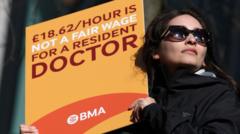
British hospital trusts report unexpected improvements during doctor strikes, including shorter patient waits, faster clinical decisions, and reduced corridor congestion. These observations raise questions about whether labor action reveals systemic inefficiencies in the NHS.
Several trusts told the BBC that strike periods coincided with operational changes that persisted after work resumed. During strikes, skeleton staffing forces hospitals to prioritize urgent cases and cancel non-essential procedures. This triage approach appears to streamline decision-making processes that normally involve multiple layers of approval.
The phenomenon reflects what organizational researchers call "slack elimination." When fewer doctors work, hospitals strip away administrative delays and bureaucratic steps. Emergency protocols activate faster. Patient pathways simplify. Paradoxically, this lean model sometimes produces better outcomes for critical cases.
However, sustainability remains questionable. Strike-driven improvements depend on a crisis mentality that cannot persist indefinitely. Staff burnout accelerates when operations run perpetually in emergency mode. Cancellations of routine care create backlogs that eventually overwhelm the system. The temporary efficiency gains come at the cost of elective surgery delays and preventive care disruption.
The situation highlights deeper NHS structural problems. Hospital management has accepted inefficiencies as inevitable rather than addressing root causes. Strikes force temporary fixes, but they do not solve underlying resource constraints, staffing shortages, or outdated systems.
Dr. Tim Kendall, medical director at the Royal College of Psychiatrists, has noted that strikes expose how hospitals function with insufficient staff. The question facing NHS leadership involves implementing permanent operational improvements without requiring industrial action to trigger them.
Clinicians and administrators must collaborate on workflow redesign during normal operations. This means eliminating unnecessary approvals, adopting faster decision protocols, and staffing levels that allow thoughtful care rather than crisis response. Hospital trusts cannot rely on strikes to drive improvement.
The irony cuts both ways. Strikes