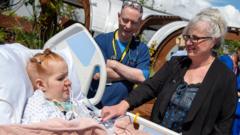
King's College Hospital in London has opened an intensive care ward on its rooftop, marking a novel experiment in patient recovery. The outdoor facility will track whether exposure to fresh air, natural light, and open space accelerates healing in critically ill patients.
The rooftop ward operates as a full intensive care unit with the same medical equipment and staffing as traditional indoor facilities. Patients receive identical monitoring and treatment protocols while experiencing the outdoor environment. Hospital staff designed the space to protect vulnerable patients from wind and weather while maintaining the therapeutic benefits of being outside.
The initiative stems from growing research on nature's healing effects. Studies have shown that natural light exposure regulates circadian rhythms, which hospitals disrupt during intensive care stays. Fresh air and views of sky can reduce stress hormones like cortisol, potentially accelerating recovery. Patients in window-adjacent hospital beds experience better sleep quality and fewer complications than those in interior rooms, according to published research.
Dr. Karandeep Singh, lead physician for the project, notes that ICU patients typically remain in windowless or artificially lit spaces for extended periods. "I forgot what it's like to be outside," one recovering patient said after spending time on the rooftop ward.
The hospital will measure multiple outcomes: length of stay, infection rates, pain medication requirements, and psychological markers like anxiety and depression. Researchers will compare rooftop patients with control groups receiving standard indoor care. The study addresses a gap in evidence about nature exposure in acute medical settings, where most research focuses on chronic conditions or outpatient rehabilitation.
If results demonstrate measurable benefits, the model could reshape intensive care design globally. Hospital architecture typically prioritizes equipment access and infection control over environmental factors. A rooftop ward that improves outcomes without adding cost or complexity offers a replicable solution for existing facilities.
The project reflects a broader shift toward biophilic hospital design, integrating natural