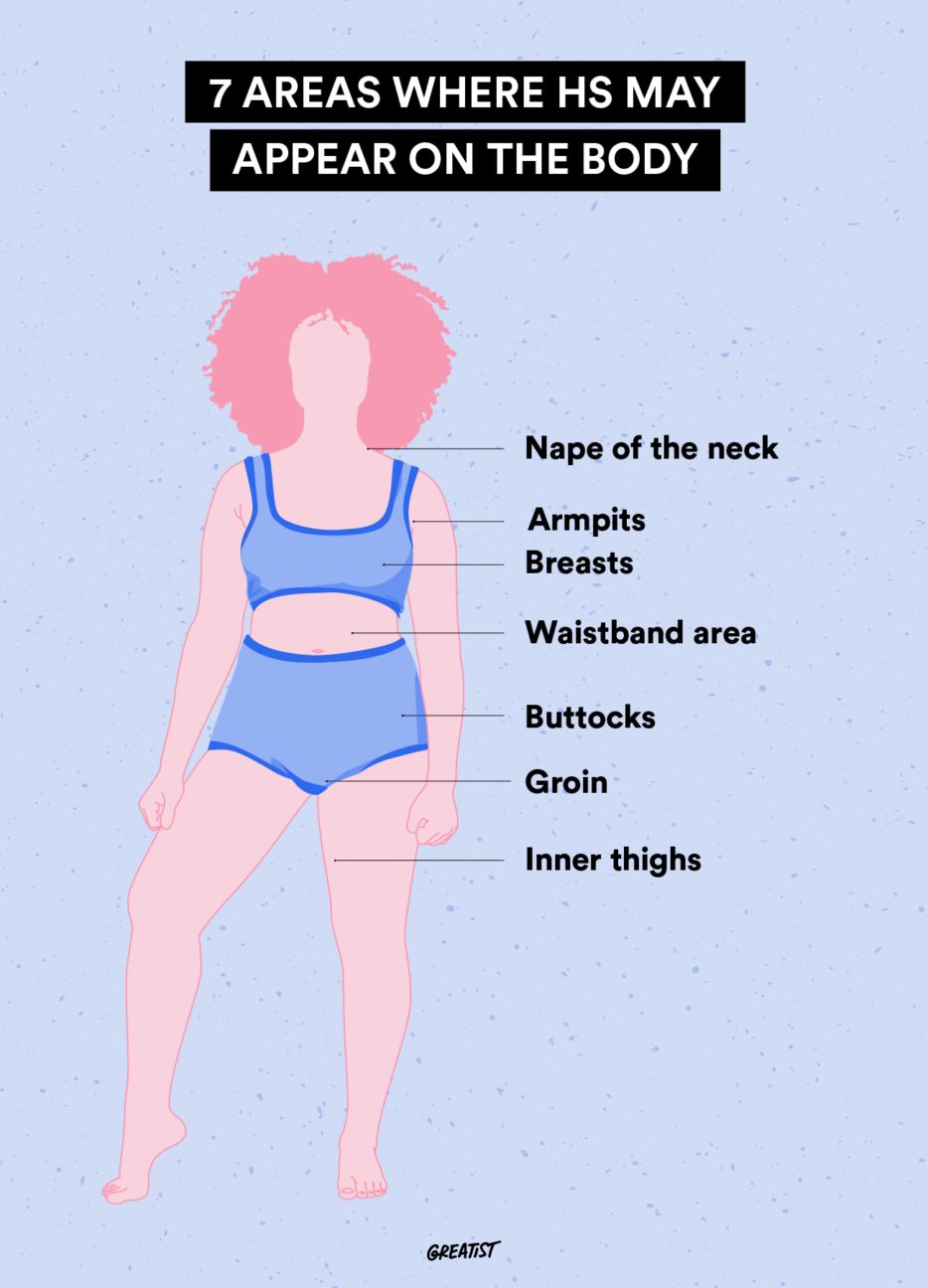
Hidradenitis suppurativa (HS) creates painful, boil-like lumps in specific areas of the body. This chronic skin condition affects hair follicles and apocrine glands, the sweat glands concentrated in certain body regions. While the lumps can become inflamed and infected, HS itself is not an infection.
The condition appears most often where skin experiences friction and moisture. Seven common locations include the underarms, breasts, groin, inner thighs, buttocks, nape of the neck, and waistband area. Friction from skin rubbing against skin or clothing can trigger flares in these vulnerable zones.
The exact cause of HS remains unclear, but dermatologists recognize that genetic, environmental, and hormonal factors all contribute. Some people inherit susceptibility to the condition. Sweat accumulation and friction in fold areas activate the immune system response that leads to lesion formation. Hormonal changes may influence disease severity, particularly in women.
HS typically begins after puberty and progresses over time without treatment. Early lesions feel like tender bumps. As the condition advances, abscesses form and may drain, creating tunnels beneath the skin called sinus tracts. These complications cause chronic pain and can restrict movement.
Recognizing HS early matters because multiple treatment options exist. Mild cases respond to improved hygiene, loose clothing that reduces friction, and topical antibiotics. Moderate to severe disease may require oral antibiotics, hormonal therapy, or biologic medications that target inflammation. Dermatologists sometimes recommend surgical drainage or removal of affected tissue.
If you notice painful, recurring lumps in fold areas of your body, especially after puberty, consult a dermatologist. Many people with HS wait years for diagnosis because the condition resembles other skin problems like acne or simple boils. A dermatologist