# Plant-Forward Diets Help Menopausal Women Manage Weight
Weight gain during menopause becomes harder to control due to hormonal shifts that slow metabolism and change how the body stores fat. Plant-forward diets offer a practical nutritional strategy that addresses these changes without restrictive calorie counting.
Research shows that eating predominantly plant-based foods helps menopausal women maintain healthier body weight. The mechanism works through several pathways. Plant foods contain fiber that promotes satiety, meaning women feel fuller on fewer calories. They also support healthy gut bacteria, which influences metabolic rate and hormone regulation. Additionally, plant-based eating patterns reduce inflammation, a process that accelerates during menopause and contributes to weight gain and metabolic dysfunction.
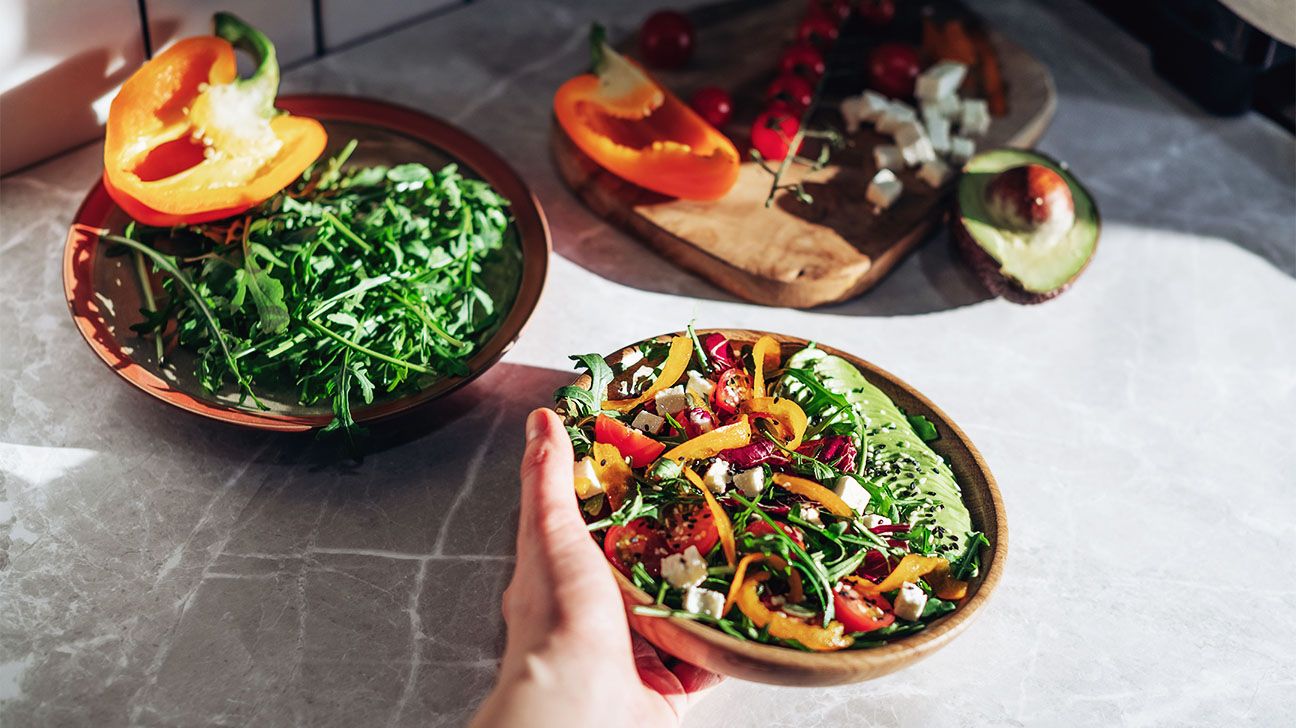
A plant-forward approach doesn't require strict vegetarianism. Women can include fish, eggs, and dairy while centering meals around vegetables, fruits, legumes, whole grains, nuts, and seeds. This flexibility makes the diet sustainable long-term, which matters because menopause spans years, not weeks.
The approach addresses the specific nutritional needs that shift after menopause. Plant foods provide phytoestrogens, plant compounds that mimic estrogen's effects in the body and may ease symptoms like hot flashes while supporting metabolic health. They also deliver iron and calcium, minerals that become harder to absorb as estrogen declines.
Menopausal women working with registered dietitians report better results when they focus on food quality rather than restriction. Eating more beans, leafy greens, berries, and whole grains naturally crowds out ultra-processed foods that trigger weight gain and blood sugar spikes.
The timing of eating matters too. Plant-forward diets work best when combined with strength training to preserve muscle mass, which naturally declines during menopause and further slows metabolism. Three meals plus sn