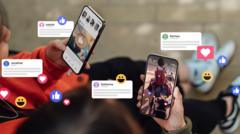
# Excessive Social Media Harms Wellbeing, Global Study Finds
The World Happiness Report has identified a direct link between heavy social media use and declining wellbeing. Researchers tracking global happiness patterns discovered that increased time spent on social platforms correlates with measurable losses in personal wellbeing across diverse populations.
The findings add weight to growing concerns about social media's psychological toll. As people spend more hours scrolling, liking, and engaging online, their reported life satisfaction and emotional health decline. The relationship holds steady across different age groups and geographic regions, suggesting this isn't an isolated phenomenon but a widespread pattern.
Social media platforms are engineered to capture attention and drive engagement. This design often prioritizes content that triggers strong emotional responses. Comparison with others' curated highlight reels, exposure to divisive content, and the dopamine-driven feedback loops of likes and comments create a psychological environment that can erode self-worth and increase anxiety.
The World Happiness Report, published annually by the United Nations Sustainable Development Solutions Network, analyzes data from millions of people globally. Researchers examine factors including income, life expectancy, social support, and increasingly, digital habits and their mental health consequences.
What makes this finding actionable is its clarity. The data doesn't suggest moderate social media use is harmful. Rather, excessive consumption shows the steepest wellbeing costs. People who use social media intentionally for specific purposes, with defined time limits, tend to maintain better emotional health than those who use it passively or compulsively.
For those looking to protect their wellbeing, setting boundaries around social media represents a practical step. Designating phone-free times, limiting notifications, and being selective about which accounts to follow all reduce unnecessary exposure to content that drives comparison and anxiety. Some people find that replacing mindless scrolling with offline activities, face-to-face connection, or time in