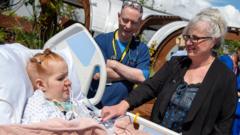
# Outdoor Intensive Care Could Transform Recovery for Critically Ill Patients
King's College Hospital in London has opened an innovative rooftop intensive care ward designed to expose critically ill patients to natural light and fresh air during treatment. The hospital now monitors how this environmental change affects recovery outcomes for seriously ill patients who traditionally spend weeks in windowless indoor wards.
The rooftop setting allows mechanically ventilated and sedated patients to experience daylight exposure, fresh air circulation, and views of the outdoors. Patients who regain consciousness during their stay report reconnecting with their surroundings in ways standard indoor ICU environments cannot provide.
Research supports the potential benefits. Studies show that natural light exposure regulates circadian rhythms, which disruption during critical illness can impair sleep quality and slow healing. Fresh air and outdoor views may also reduce stress hormones in both patients and staff. Hospital-acquired infections, a major concern in traditional ICUs, could decrease with improved air circulation.
The intervention addresses a documented psychological burden. Patients emerging from sedation in standard ICUs report disorientation and sensory deprivation. One patient quoted in the reporting expressed profound relief, saying "I forgot what it's like to be outside."
King's College researchers will track measurable outcomes including infection rates, length of stay, delirium incidence, and patient-reported recovery experiences. The study will reveal whether rooftop positioning provides genuine clinical advantages or primarily psychological comfort.
This initiative reflects growing recognition that hospital design influences patient outcomes. Environmental factors like light, air quality, and visual stimulation activate the parasympathetic nervous system, supporting healing processes. The rooftop ward bridges evidence-based design with practical intensive care delivery.
The project represents a low-cost intervention with potential for widespread adoption. If outcomes prove positive, hospitals could repurpose underused rooftop spaces into therapeutic environments, fundamentally changing how