# Toy MRI Scanner Helps Children Face Medical Scans Without Fear
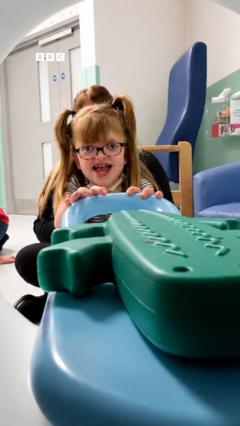
A miniature MRI machine is helping children overcome anxiety before undergoing the real procedure. Researchers at Great Ormond Street Hospital in London developed the toy scanner to familiarize young patients with the experience of entering a clinical MRI machine.
Children can practice scanning various toys inside the replica, learning what to expect during their actual medical appointment. The scanner mimics the sounds, enclosed space, and general experience of a full-sized MRI without any radiation or medical risk.
MRI anxiety in children remains a persistent clinical challenge. Many young patients require sedation before scans because they cannot remain still in the confined space, which can delay diagnoses and complicate treatment planning. The toy scanner addresses this problem through exposure therapy, a well-established psychological technique where gradual familiarity reduces fear responses.
The hospital team observed that children who used the toy scanner before their clinical MRI showed noticeably reduced anxiety levels. Staff members report the approach is particularly effective for younger children, who benefit from hands-on learning experiences.
This innovation reflects broader shifts in pediatric medicine toward child-centered care. Medical facilities increasingly recognize that preparation tools and anxiety-reduction strategies improve outcomes while reducing the need for sedation. Sedation carries its own risks and requires additional monitoring, making it preferable to avoid when possible.
The toy scanner requires no batteries or electricity, making it cost-effective and portable across different hospital departments. Other pediatric hospitals have expressed interest in implementing similar models.
For parents preparing children for MRI scans, the toy scanner demonstrates how simple, playful interventions can significantly impact medical experiences. Hospitals implementing this approach report families feeling more confident and children cooperating better during actual procedures.