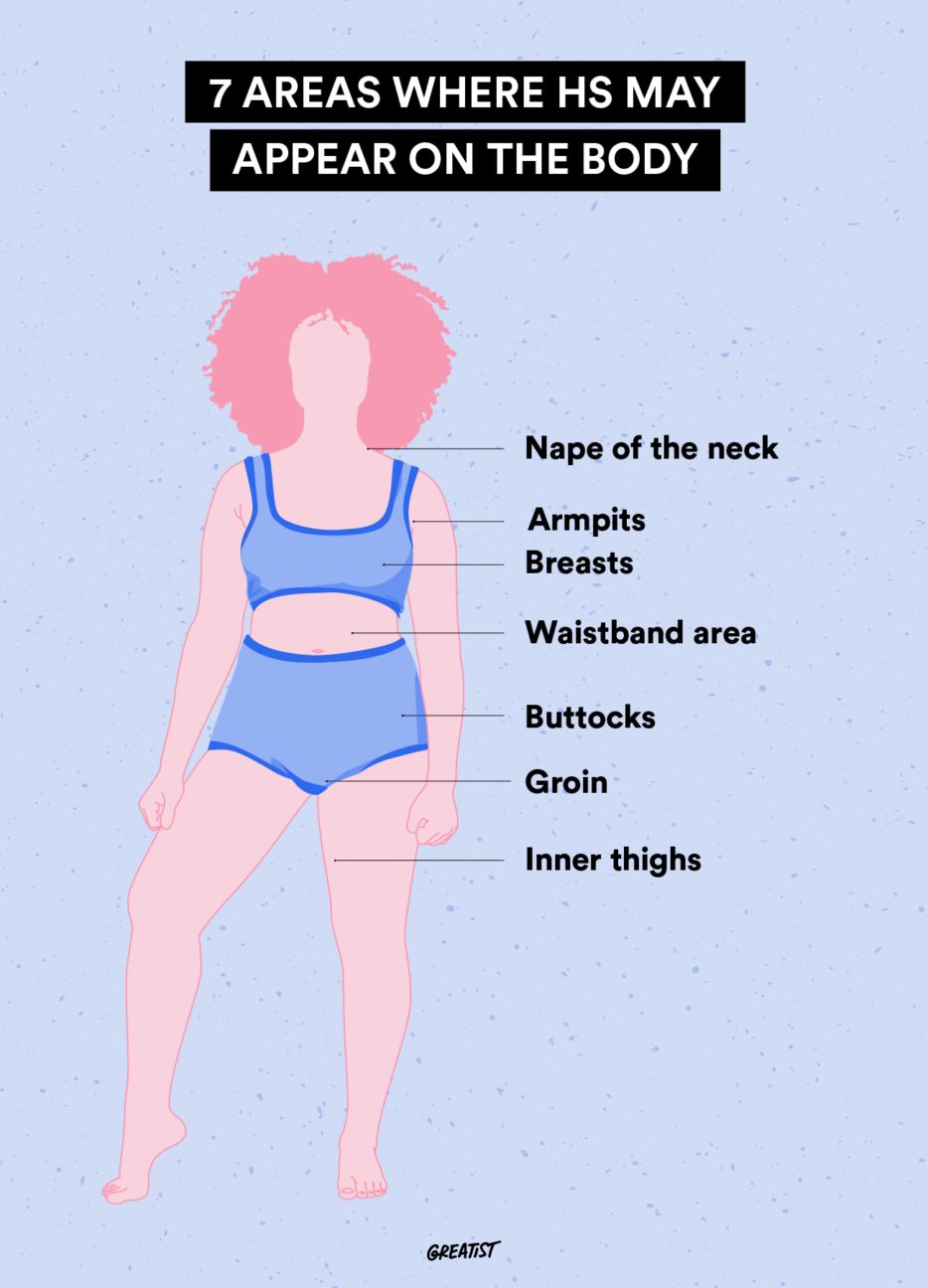
Hidradenitis suppurativa (HS) is a chronic skin condition that creates painful, boil-like lesions in specific body areas. The condition forms in regions rich with hair follicles and apocrine glands, which produce sweat. HS develops most often where skin experiences repeated friction and moisture.
The seven most common sites for HS include the underarms, breasts, groin, inner thighs, buttocks, nape of the neck, and waistband area. Lesions in these locations frequently become inflamed and infected, causing significant discomfort. The condition worsens with friction from skin-to-skin contact or tight clothing rubbing against affected areas.
HS is not an infection itself, though the lesions can become secondarily infected. The distinction matters for treatment. Doctors typically treat active infections with antibiotics while addressing the underlying inflammatory process separately.
The exact cause of HS remains unknown, but researchers have identified contributing factors. Genetic predisposition plays a substantial role, as does hormonal fluctuation. Environmental triggers like friction, heat, and sweating can initiate or worsen flares. Smoking and obesity increase HS severity, according to dermatological research.
Early diagnosis improves outcomes significantly. Many people live with HS for years before receiving proper diagnosis, mistaking it for recurring boils or cysts. A dermatologist familiar with HS can distinguish it from other skin conditions through clinical examination and patient history.
Treatment depends on severity. Mild cases may respond to improved hygiene, loose clothing, and topical antibiotics. Moderate to severe HS often requires systemic medications, biologics, or surgical intervention. Dermatologists increasingly prescribe TNF-alpha inhibitors like adalimumab, which has shown effectiveness in reducing lesion formation and pain.
Anyone experiencing persistent, painful lumps in skin