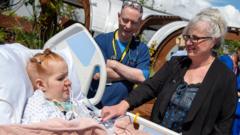
King's College Hospital in London has opened an intensive care ward on its rooftop, marking an experiment in environmental design for critically ill patients. The outdoor space allows healthcare providers to monitor whether exposure to natural light, fresh air, and open sky improves recovery outcomes for people receiving intensive care.
The rooftop ward represents a shift in thinking about hospital design. Traditionally, intensive care units occupy windowless interior spaces focused on clinical efficiency and infection control. This new facility challenges that model by testing whether nature exposure benefits patients at their most vulnerable.
Research supports the intuition behind the project. Studies have shown that natural light exposure influences circadian rhythms, which regulate sleep quality and immune function. A 2019 study published in JAMA Internal Medicine found that ICU patients with access to natural light experienced less delirium and shorter hospital stays. Access to views and outdoor spaces also reduces stress hormones in hospital staff, potentially improving the quality of care they provide.
The rooftop ward design includes protective measures to maintain clinical standards. Medical equipment, monitoring systems, and infection control protocols remain intact. Patients remain under close observation while benefiting from daylight and outdoor air.
One patient quoted in the reporting captured the emotional impact: "I forgot what it's like to be outside." This reflects how intensive care isolation, even when necessary for survival, creates psychological strain alongside physical recovery.
The project builds on growing evidence that hospital environments affect healing. Florence Nightingale recognized this principle over 150 years ago. Modern research confirms that natural light exposure, reduced noise, and views of nature lower blood pressure, reduce pain perception, and improve mental health outcomes.
King's College Hospital will track patient outcomes systematically, collecting data on recovery speed, delirium rates, length of stay, and staff wellbeing. These measurements will help determine whether the rooftop model could expand to other hospitals.
The rooftop intensive care