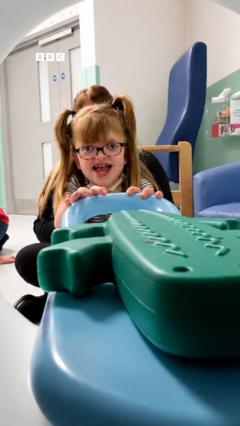
# Toy MRI Scanner Helps Children Face Medical Imaging Without Fear
A miniature MRI scanner toy is reducing anxiety in children who need brain imaging procedures. The device, created by researchers at a pediatric hospital, allows kids to familiarize themselves with the machine's environment before entering the actual scanner.
Children experience real fear during MRI scans. The machines are loud, confining, and require patients to stay completely still for extended periods. Many young patients panic or move excessively, which compromises image quality and sometimes forces hospitals to sedate children with medications that carry their own risks.
The toy scanner works by scanning small toy animals and objects, letting children experience the sounds, sensations, and procedure without any medical stakes. Kids can hold their stuffed animals inside the miniature device while it makes the distinctive MRI noises and vibrations. This exposure therapy approach helps demystify the experience.
Hospital staff use the toy scanner during pre-appointment visits. Children who interact with it before their actual MRI show measurably lower anxiety levels when they arrive for imaging. Some hospitals report needing to sedate fewer children after introducing the toy scanner into their preparation routine.
The device represents a straightforward intervention grounded in exposure therapy, a well-established psychological technique. Repeated, safe exposure to anxiety-triggering situations builds confidence and reduces fear responses. For children, this play-based approach feels natural rather than clinical.
Parents report their children feel more in control after using the toy scanner. This sense of agency matters for pediatric patients. When children understand what to expect and feel prepared, their cooperation during the actual procedure improves dramatically.
The toy scanner costs significantly less than alternative approaches like general anesthesia for uncooperative young patients. Beyond cost, avoiding sedation means eliminating medication risks and recovery time. The device simply lets children practice bravery in a low-pressure setting.
This