Hidradenitis suppurativa (HS) creates painful, boil-like lumps in specific body areas where hair follicles and apocrine sweat glands cluster together. The condition is chronic and progressive, but it is not an infection despite how it appears.
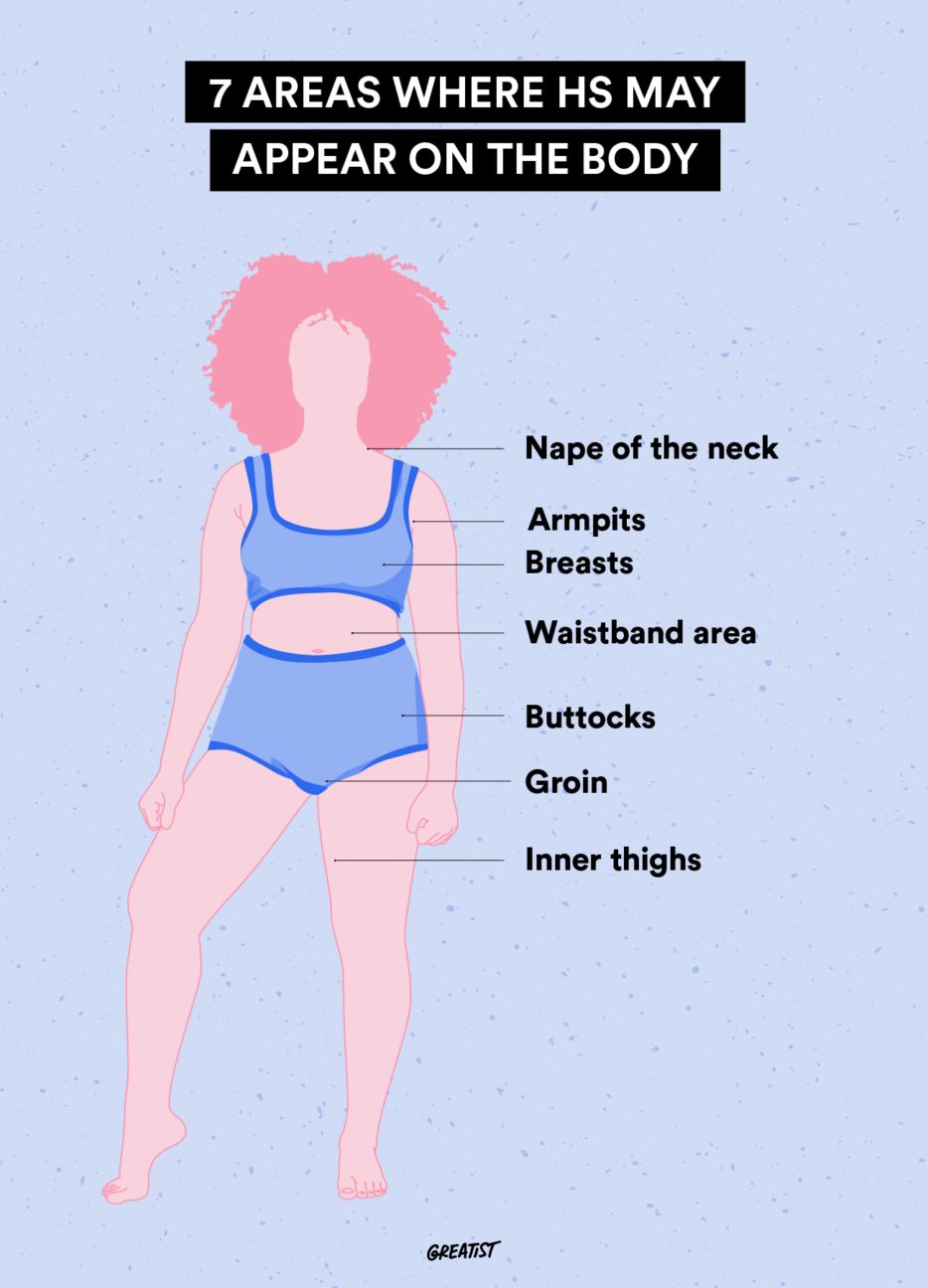
HS appears most often in seven predictable locations. The underarms rank among the most common sites, followed by the breasts, groin, inner thighs, buttocks, the nape of the neck, and the waistband area. These zones share a common feature: they combine warmth, moisture, and friction from skin rubbing against skin or clothing.
The lesions start as painful nodules that can become inflamed, infected, and form tunneling tracts beneath the skin. Friction appears to trigger or worsen flares, which is why HS lesions cluster in skin folds and areas subject to constant rubbing or sweating.
The exact cause remains unclear, though researchers recognize three contributing factors: genetics, environment, and hormones. People with a family history of HS face higher risk. Hormonal fluctuations in women sometimes coincide with flare patterns. Environmental triggers like friction, sweat, heat, and tight clothing can intensify symptoms.
HS typically emerges after puberty and peaks in people in their 20s and 30s. The severity varies widely. Some experience occasional mild bumps. Others develop severe, interconnected lesions that leave permanent scars and tunneling tracts.
Early recognition matters because dermatologists now offer multiple treatment approaches. Topical medications, oral antibiotics, hormonal therapies, biologic drugs, and surgical drainage all help manage symptoms and prevent progression. Without treatment, HS tends to worsen over time.
If you notice recurrent, painful boils in skin folds that don't respond to standard acne treatments, see