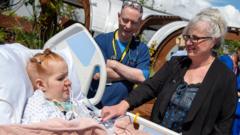
King's College Hospital in London has opened an intensive care ward on its rooftop, marking a shift in how hospitals approach patient recovery. The outdoor space monitors whether exposure to fresh air, natural light, and views of the surrounding landscape accelerates healing in critically ill patients.
Intensive care units traditionally operate in enclosed environments with artificial lighting and climate control. This rooftop ward challenges that model by combining standard critical care equipment with outdoor access. Patients in the unit receive full monitoring and medical support while experiencing direct contact with natural elements.
The hospital is conducting systematic observation to measure recovery outcomes. Researchers will track metrics like pain levels, infection rates, sedation requirements, and length of stay. They're also monitoring patient psychological markers, since natural exposure has long shown benefits for mental health and stress reduction.
The concept draws on existing evidence about nature's healing properties. Studies have documented that access to daylight and outdoor views reduces anxiety, lowers blood pressure, and decreases cortisol levels in hospitalized patients. However, intensive care patients typically cannot leave their beds, making outdoor access rare.
By bringing the outdoors to patients rather than moving patients outdoors, King's College Hospital addresses a practical barrier. The rooftop design maintains full medical capability while offering environmental benefits previously unavailable to this population.
This initiative reflects broader recognition within healthcare that recovery involves more than clinical intervention. Patient experiences and environmental factors matter alongside medications and procedures.
The hospital expects this pilot will generate data on whether outdoor wards deserve expansion in critical care. If outcomes show meaningful improvements, other intensive care units may adopt similar designs. This could reshape how hospitals construct and operate their most intensive treatment spaces, integrating nature into environments traditionally focused purely on medical technology.