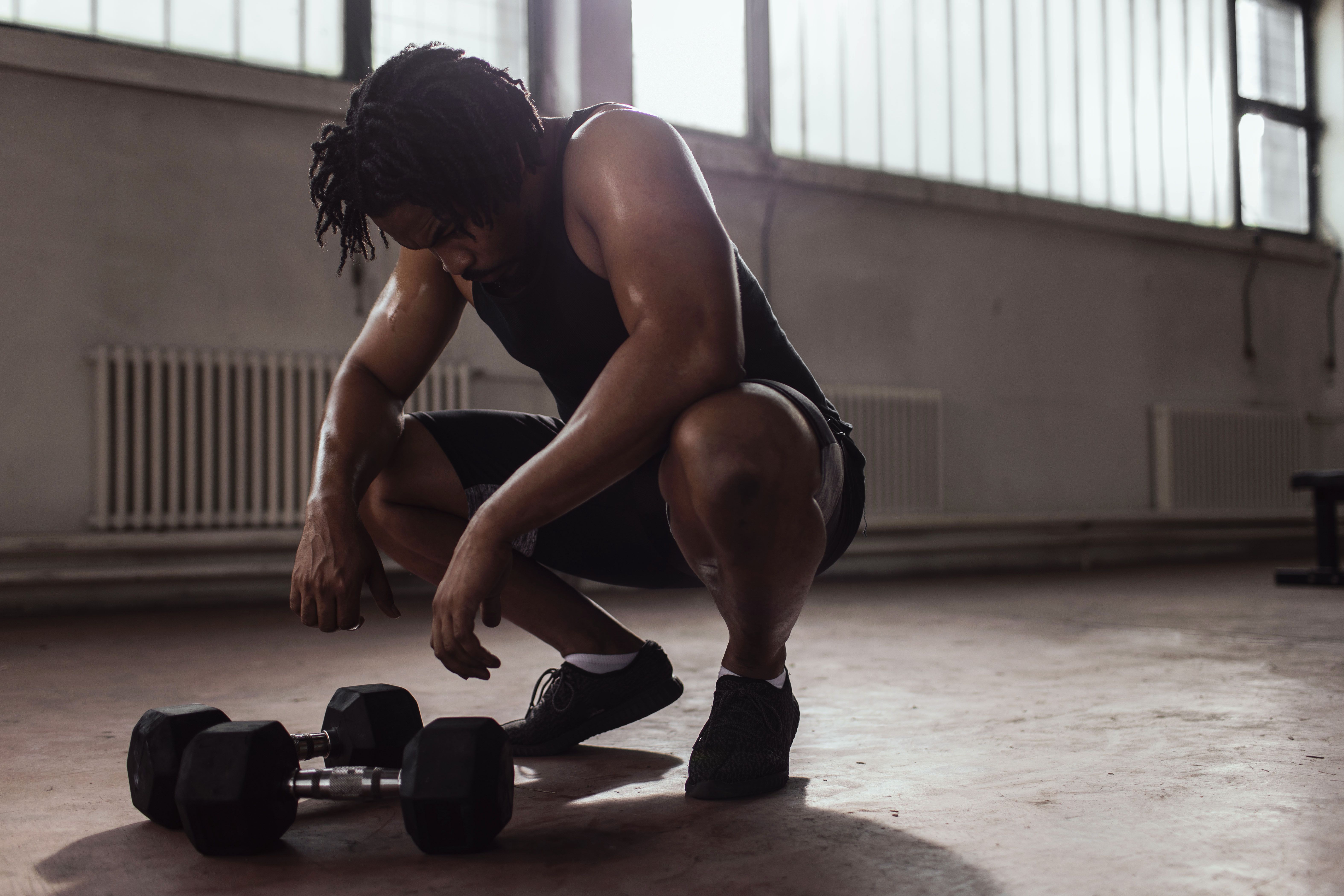
# Dumbbell Leg Workouts Build Real Lower Body Strength
Barbells dominate strength training conversation, but dumbbells deliver equally effective results for leg development. This approach offers practical advantages for most lifters, particularly those training at home or in crowded gyms.
Dumbbells force each leg to work independently, eliminating the strength imbalances that barbells can mask. When one side compensates for weakness on the other, progress stalls. Unilateral training with dumbbells prevents this problem. Research in the Journal of Sports Sciences confirms that single-limb exercises recruit stabilizer muscles more intensely than bilateral movements, building functional strength that translates to everyday activity.
The dumbbell leg workout routine targets all major lower body muscles through compound movements. Goblet squats work the quads and glutes through a full range of motion while keeping the load centered. Single-leg Romanian deadlifts build posterior chain strength and hip stability. Bulgarian split squats isolate each leg individually, addressing asymmetries common in athletes and general lifters.
Progressive overload remains essential. Start with a weight that allows 8-12 controlled repetitions with good form. When that becomes easy, add five pounds. Consistency matters more than perfection. Three sessions weekly over eight weeks produces measurable strength gains.
Dumbbells also reduce injury risk compared to heavy barbell work. The independent loading reduces spinal compression and allows natural movement patterns that protect knee and hip joints. Lifters can stop immediately if form breaks down without being trapped under a loaded bar.
This approach works whether your goal is muscle building, athletic performance, or functional strength. The equipment is accessible, the movement patterns are learnable, and the results are reliable. Give your barbell a rest and spend four to six weeks with dumbbells. Your legs, joints, and training schedule will thank you.