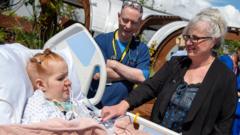
King's College Hospital in London has opened an intensive care ward on its rooftop, marking an unusual experiment in patient recovery. The outdoor unit will monitor how exposure to fresh air and natural light affects the healing of critically ill patients.
The rooftop location allows seriously ill patients to experience outdoor conditions while remaining under intensive care monitoring. Staff can observe whether natural elements like sunlight, fresh air, and views of the surroundings improve recovery outcomes compared to traditional indoor ICU settings.
This initiative stems from growing research into how environmental factors influence patient recovery. Studies have shown that access to natural light and outdoor views can reduce stress hormones, lower blood pressure, and improve sleep quality in hospitalized patients. The rooftop ward extends these findings to the most vulnerable population: those requiring intensive care.
The hospital's approach addresses a documented challenge in critical care settings. Patients spending weeks in traditional ICUs often experience disorientation, depression, and delirium. One patient quoted in reports said, "I forgot what it's like to be outside." This observation underscores how isolation in windowless units can psychologically impact recovery, even as machines monitor vital signs.
The rooftop ward maintains full medical infrastructure. Ventilators, monitoring equipment, and trained staff remain present. The difference lies in the environment itself. Patients receive the same level of clinical care while potentially benefiting from natural daylight, temperature variation, and outdoor air exposure.
King's College Hospital will systematically track patient outcomes across multiple metrics. Researchers will measure hospital stay duration, infection rates, psychological well-being, and physiological markers like blood pressure and inflammation levels. This data will reveal whether outdoor ICU settings produce measurable health improvements.
The project reflects a broader shift in healthcare design. Hospitals increasingly recognize that healing happens through multiple pathways. Clinical interventions matter, but environment matters too. If the rooftop ward demonstrates improved outcomes, it