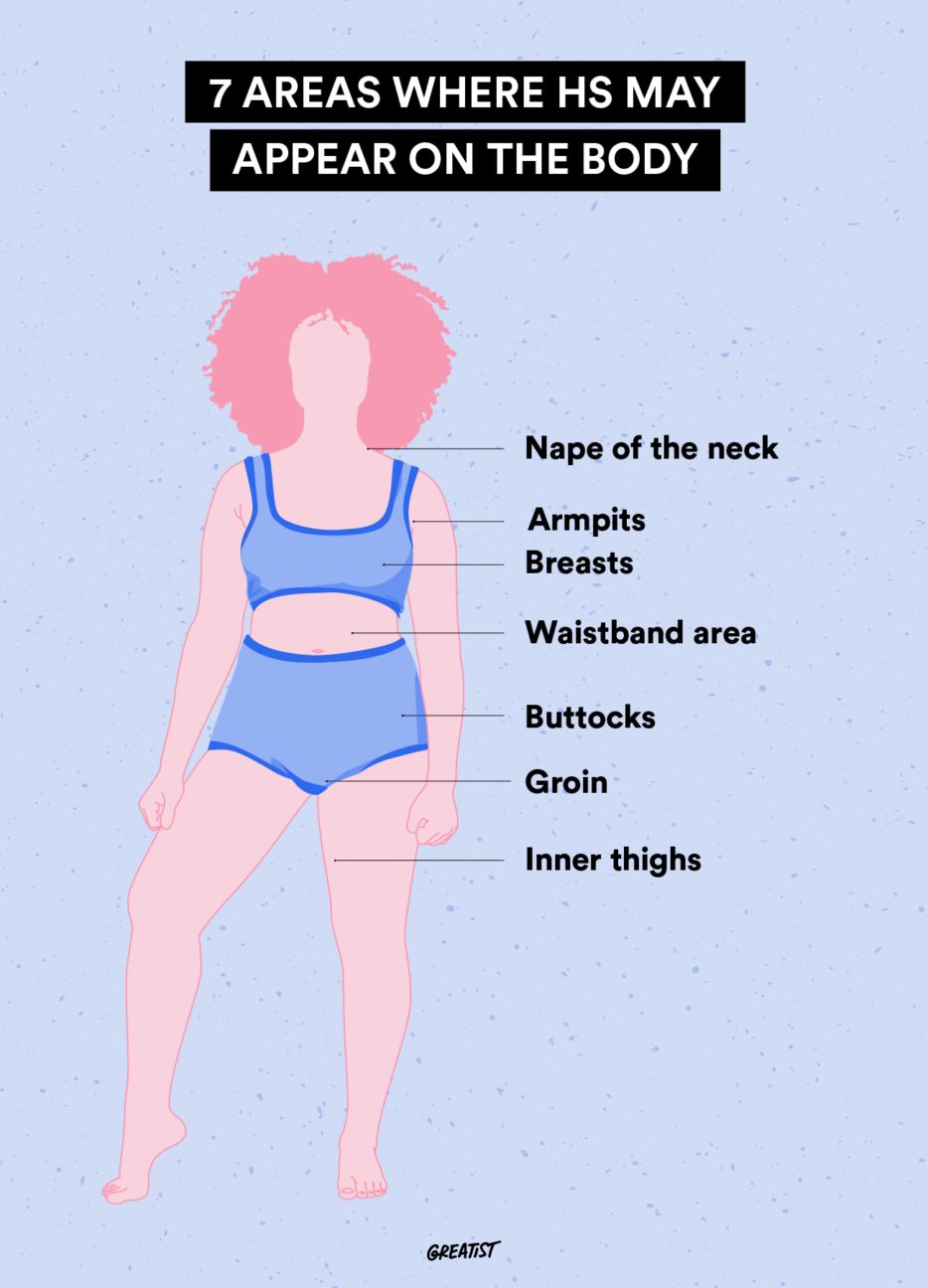
Hidradenitis suppurativa (HS) is a chronic inflammatory skin condition that produces painful, boil-like lesions in specific body regions. Unlike infections, HS results from dysfunction in hair follicles and sweat glands, though the exact mechanisms remain unclear.
The condition appears most often in areas where skin rubs against skin or clothing, and where sweat and moisture accumulate. Dermatologists identify seven primary locations: underarms, breasts, groin, inner thighs, buttocks, the nape of the neck, and waistband areas. Friction and humidity trigger inflammation in these zones, causing nodules that can rupture, drain, and form scar tissue over time.
HS lesions begin as small, tender bumps that progress to painful abscesses. The condition differs fundamentally from acne or typical boils because it involves deeper skin layers and creates interconnected tunnels beneath the surface. Breakouts can recur in the same spots repeatedly, leading to chronic pain, drainage, and emotional distress for those affected.
Several factors contribute to HS development. Genetic predisposition plays a role, with the condition clustering in families. Hormonal fluctuations influence disease activity, particularly around menstrual cycles in women. Smoking, obesity, and certain immune system irregularities increase flare severity. Environmental triggers like excessive sweating, tight clothing, and poor ventilation worsen symptoms.
Dermatologists emphasize early diagnosis and intervention to prevent progression. Treatments range from topical antibiotics and oral medications to biologics that target immune pathways. In severe cases, surgical removal of affected tissue offers long-term relief. Lifestyle modifications help too: loose clothing reduces friction, weight management decreases skin-on-skin contact, and smoking cessation improves outcomes significantly.
If you experience persistent, painful nodules in these body areas