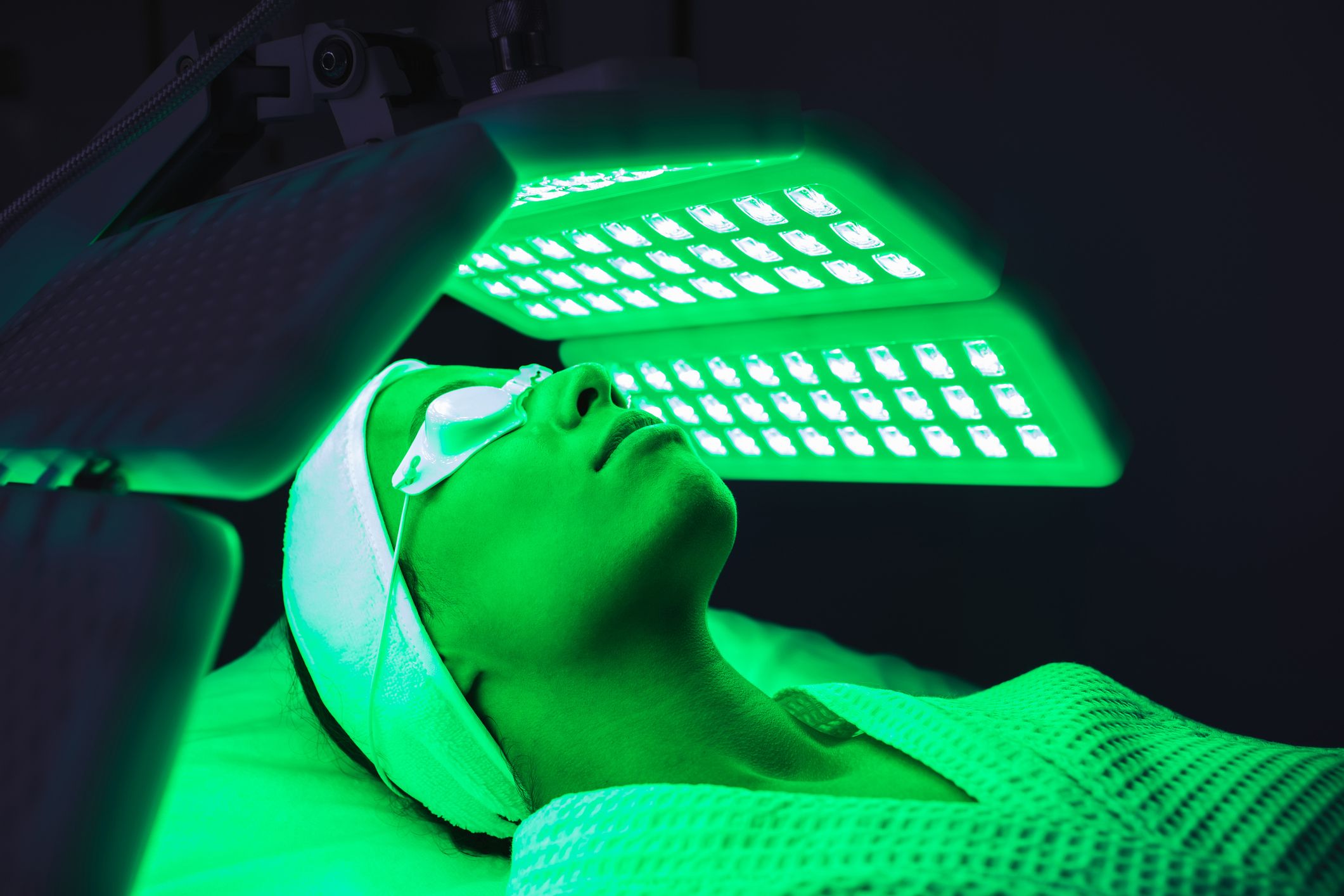
Green light therapy represents an emerging approach to treating hyperpigmentation and dark spots. Unlike blue light, which targets acne-causing bacteria, or red light, which stimulates collagen production, green light operates at a wavelength between 500 and 570 nanometers to specifically address melanin overproduction.
Dermatologists explain that green light works by inhibiting tyrosinase, an enzyme responsible for melanin synthesis. When melanin production decreases, dark spots and uneven skin tone gradually fade. The treatment proves gentler than traditional methods like hydroquinone or chemical peels, making it suitable for sensitive skin types and darker complexions, which face higher risk of post-inflammatory hyperpigmentation from harsher treatments.
Research supporting green light therapy remains limited but growing. Studies show consistent results when green light is applied consistently over weeks, though results develop slowly. Most dermatologists recommend 2 to 3 sessions weekly for 4 to 8 weeks before visible improvement appears. Some practitioners combine green light with other treatments like vitamin C serums or niacinamide to enhance effectiveness.
Devices range from professional-grade equipment used in dermatology offices to at-home LED panels consumers can purchase. Professional treatments typically cost more but deliver higher intensity wavelengths. At-home devices offer convenience and repeated exposure, though results take longer to manifest.
Board-certified dermatologists note that green light therapy works best for solar lentigines, melasma, and post-acne marks rather than deeper pigmentation issues. Results vary based on skin tone, age, and how long dark spots have existed. Older spots respond more slowly than recent ones.
The therapy carries minimal side effects. Unlike retinoids or hydroquinone, green light causes no irritation, peeling, or photosensitivity. Users simply need consistent application and patience.