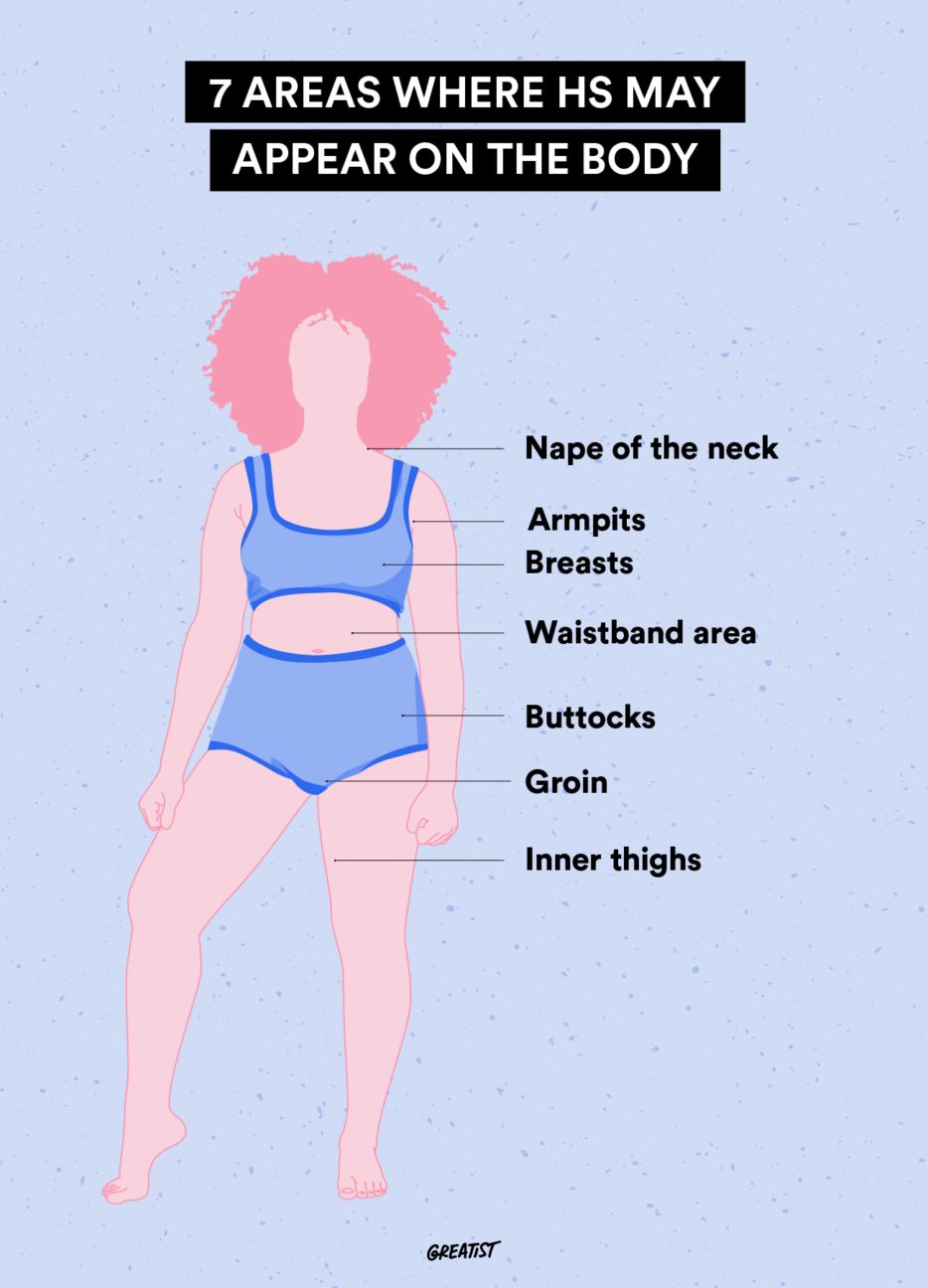
Hidradenitis suppurativa (HS) causes painful, boil-like lumps in specific body areas, but many people don't realize where this chronic skin condition can strike. Understanding the typical locations helps patients recognize symptoms earlier and seek appropriate care.
HS forms in areas where hair follicles and apocrine sweat glands cluster together. The condition thrives in warm, moist zones prone to friction and sweating. The underarms rank as the most common site, followed by the groin and inner thighs. The condition also frequently develops under the breasts, in the buttock area, along the nape of the neck, and around the waistband where clothing creates constant friction.
These locations share a pattern. Repeated skin-to-skin contact or rubbing from clothing irritates the follicles and glands, potentially triggering flares. Sweat accumulation in these creases creates an environment where HS lesions develop and worsen.
HS itself isn't an infection, though the lumps can become infected and inflamed. They form when hair follicles become blocked and rupture under the skin. Unlike acne or typical boils, HS lesions often progress into tunneling tracts beneath the skin, creating interconnected channels of inflammation. This explains why HS causes such intense pain and why drainage can occur from multiple sites.
The exact cause remains unclear, though genetics, hormones, and environmental factors all contribute to HS development. Friction plays an undeniable role in triggering and worsening flares, which is why the condition clusters in areas with the most movement and moisture.
If you notice recurring, painful lumps in these high-friction zones that don't respond to standard acne treatments, consult a dermatologist. Many people spend years misdiagnosing HS as acne or simple boils, del