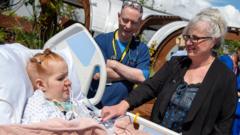
King's College Hospital in London has opened an intensive care ward on its rooftop, marking a novel approach to treating critically ill patients. The facility will serve as a research ground to measure how outdoor exposure influences recovery outcomes for patients requiring intensive care.
The rooftop ward represents a departure from traditional closed ICU environments. Seriously ill patients at the facility will benefit from natural light, fresh air, and views of the surrounding landscape while receiving round-the-clock monitoring and care. Hospital staff will track recovery metrics to understand whether these environmental factors contribute to faster healing or improved clinical outcomes.
The logic behind outdoor intensive care draws from existing research on nature exposure and health. Studies have shown that access to natural environments reduces stress hormones, lowers blood pressure, and improves psychological well-being in hospital patients. However, most of this evidence comes from less acutely ill populations. The rooftop ward allows researchers to test whether these benefits extend to the most vulnerable patients.
King's College Hospital designed the space with medical safety as the priority. The rooftop includes protective barriers, weather monitoring systems, and equipment to manage sudden deterioration or extreme conditions. Staff can move patients indoors within seconds if needed. The setup allows observation of whether outdoor time genuinely affects recovery without compromising the intensive monitoring these patients require.
Patient testimonials hint at the potential impact. One recovering patient noted the psychological shift of spending time outside: "I forgot what it's like to be outside." For people spending weeks in traditional ICUs, where fluorescent lights and controlled climates dominate, this statement reflects a real loss during critical illness.
The research will provide concrete data on whether hospitals should integrate outdoor spaces into intensive care design. If results show meaningful improvements in recovery speed, mortality rates, or psychological outcomes, the model could influence ICU construction standards globally. The initiative sits at the intersection of architecture, medicine, and wellness, testing whether something as simple as fresh