# Fewer People Reporting Eye Damage From Recent Eclipse Than Expected
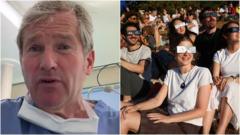
An eye surgeon has observed that fewer people are seeking treatment for eclipse-related eye injuries following the recent solar eclipse compared to the 1999 total eclipse in the UK. This observation comes as public health officials emphasize the risks of unprotected solar viewing.
The comparison between eclipse events offers insight into how public awareness campaigns shape behavior. In 1999, when the UK experienced its last total solar eclipse, eye damage cases prompted significant medical attention. The recent eclipse saw notably lower numbers of people reporting vision problems to eye specialists, suggesting that decades of safety messaging may have improved how the public approaches solar events.
Looking directly at the sun without proper protection causes solar retinopathy, a form of eye damage that occurs when ultraviolet and infrared radiation burn the retina. The damage can be painless initially, which makes it particularly dangerous. Some people don't realize they've harmed their vision until hours or days later when symptoms like blurred vision, dark spots, or difficulty reading become apparent. In severe cases, the damage proves permanent.
The British Medical Association and other eye health organizations distributed clear guidance before the eclipse, emphasizing that only ISO 12312-2 certified eclipse glasses provide safe viewing. Regular sunglasses, even dark ones, offer no protection against solar radiation during an eclipse. This messaging appears to have resonated with the public in ways it didn't in 1999.
The reduction in injury cases reflects broader improvements in eclipse safety information. Television broadcasts, social media campaigns, and widespread public education have made eclipse safety a household concept. Schools distributed protective glasses to students. Astronomy clubs and museums provided viewing stations with proper equipment. This multi-layered approach to communication likely prevented many cases of preventable eye damage.
However, eye surgeons remain cautious about declaring the issue resolved. Some people still ignore safety warnings, either through skepticism or deliberate risk-taking. Emergency departments may see delayed presentations as patients develop symptoms days after eclipse viewing. Additionally, children represent a particularly vulnerable group, as they may not fully understand the consequences of their actions or may be curious enough to look despite warnings.
For anyone who viewed the eclipse without protection or is now experiencing vision changes, optometrists recommend immediate evaluation. Describing the timing of exposure, duration of viewing, and current symptoms helps eye specialists determine whether solar retinopathy has occurred. Early detection matters, though treatment options remain limited. Established damage cannot be reversed, making prevention the only truly effective strategy.
The safer outcome following this eclipse demonstrates that sustained public health effort works. When communities consistently receive clear, accurate information about health risks and see trusted figures modeling safe behavior, people make better choices. The next total solar eclipse visible from the UK won't occur until 2090, but the lessons about effective health communication from this event will apply to countless other situations requiring public awareness and behavioral change.