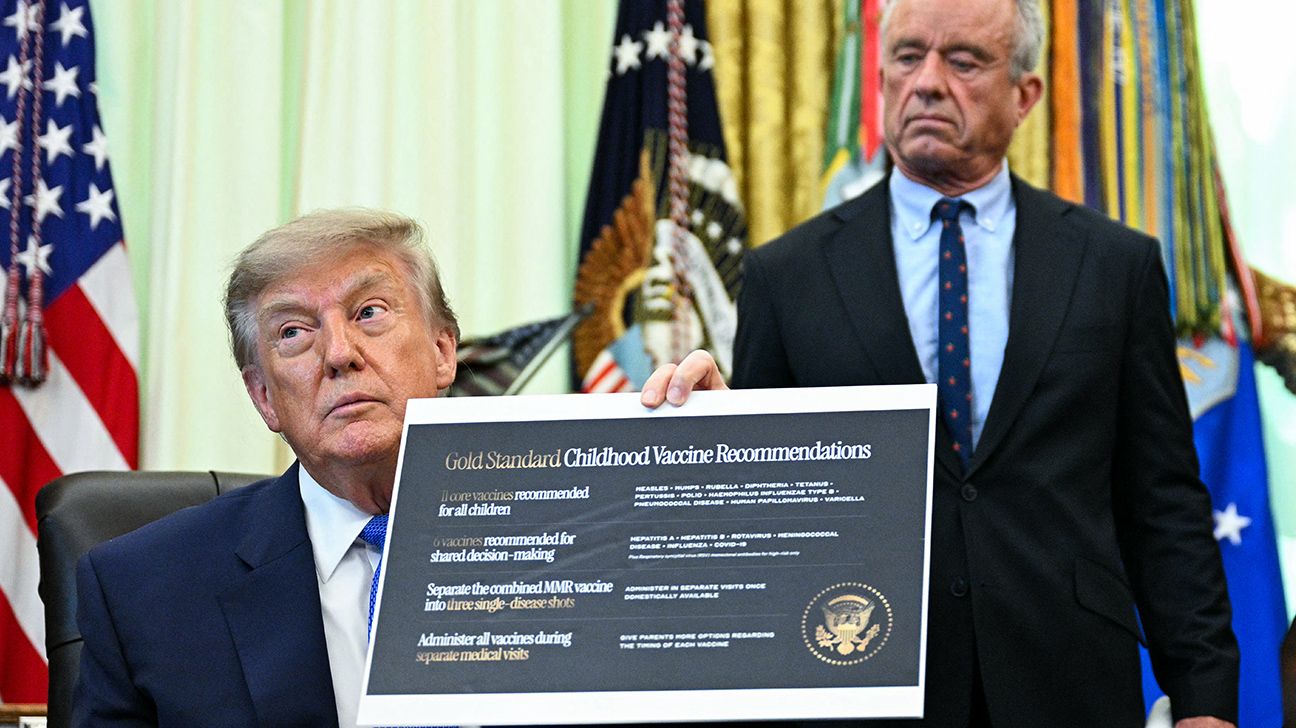
President Trump has signed an executive order directing changes to the childhood vaccination schedule, with Health Secretary Robert F. Kennedy Jr. overseeing the initiative. The order comes despite unified opposition from major medical organizations including the American Academy of Pediatrics, the American Medical Association, and the CDC.
The executive order targets the existing vaccination schedule that has guided pediatric immunizations for decades. Kennedy, a known vaccine skeptic, now holds authority over vaccine policy implementation. Medical experts warn the changes could disrupt protections against diseases like measles, polio, and pertussis that have been controlled through coordinated vaccination programs.
The American Academy of Pediatrics issued a statement emphasizing that the current vaccine schedule rests on extensive clinical trials and decades of safety monitoring. The organization stressed that altering established protocols without equivalent scientific evidence poses public health risks. Similar positions came from infectious disease specialists and epidemiologists across academic medical centers.
Public health data shows the current schedule has dramatically reduced childhood mortality from vaccine-preventable diseases. Measles deaths dropped from hundreds annually in the pre-vaccine era to near zero in recent years. Polio, once paralyzing thousands of American children annually, has been eliminated domestically through vaccination since 1979.
Kennedy has previously promoted vaccine hesitancy and promoted discredited links between vaccines and autism, claims rejected by extensive research. His appointment signals a departure from evidence-based vaccine policy established through the FDA and CDC approval processes.
Public health experts raise concerns about timing. Vaccine hesitancy has already increased measles cases in certain communities. Health officials worry that policy shifts could further erode confidence in immunization programs and trigger outbreaks of preventable diseases.
The order signals uncertainty about whether existing medical consensus will influence implementation. Pediatricians nationwide await clarity on which vaccines face schedule changes and whether states can maintain current protocols independently.