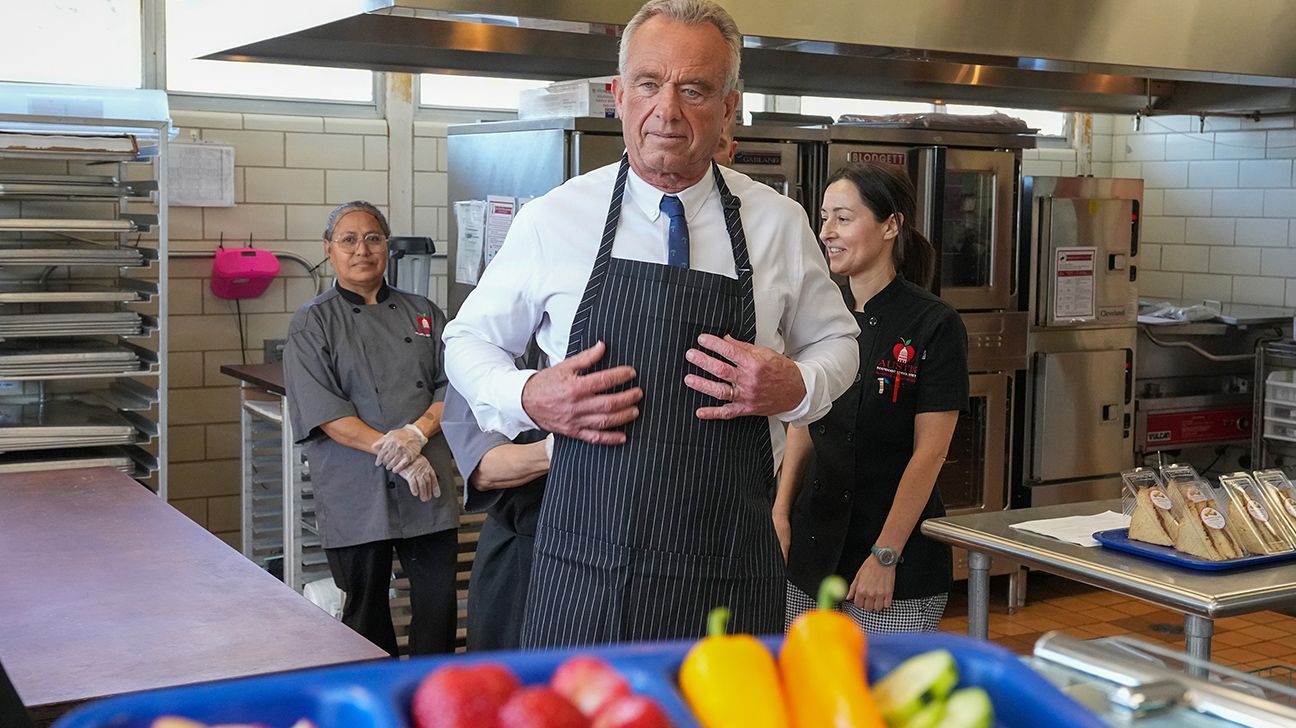
Robert F. Kennedy Jr., now serving as Health Secretary, has launched "The Real Food Show," a cooking program that promotes dietary philosophies departing significantly from conventional nutrition guidance. The show represents Kennedy's long-standing advocacy for what he calls "real food" while questioning established dietary recommendations.
Kennedy has built a public platform around critiques of processed foods, seed oils, and what he characterizes as misguided government nutrition policies. His new cooking show extends these views into mainstream entertainment, demonstrating recipes and food preparation methods aligned with his vision of optimal nutrition. The program reflects Kennedy's broader influence over dietary discourse, particularly among audiences skeptical of institutional health guidance.
The show's core premise challenges the nutritional frameworks that have guided American public health for decades. Kennedy has consistently argued that the current food system promotes illness through ultra-processed products and refined carbohydrates. His cooking demonstrations feature whole foods, animal products, and cooking methods he believes restore health to individual diets.
This platform matters because Kennedy's position as Health Secretary gives his dietary philosophy institutional weight. His views on nutrition differ from recommendations from the Academy of Nutrition and Dietetics and guidelines from the U.S. Department of Agriculture and Department of Health and Human Services. These organizations base recommendations on peer-reviewed research examining long-term health outcomes across populations.
Kennedy's approach emphasizes what practitioners sometimes call "real food" nutrition, prioritizing unprocessed ingredients, often including higher proportions of animal products than conventional dietary guidelines suggest. He has promoted alternative perspectives on dietary cholesterol, saturated fats, and carbohydrate restriction. While some individuals report health improvements following similar dietary patterns, large-scale research on low-carbohydrate and carnivore-adjacent diets shows mixed results for cardiovascular health compared to plant-forward approaches.
The cooking show format reaches audiences through entertainment rather than traditional medical channels. This approach bypasses the peer-review process that typically validates nutrition recommendations. It also sidesteps conversations about individual variation in dietary response, medical contraindications, and the difference between anecdotal improvement and population-level evidence.
Nutritionists point out that dietary needs vary based on age, activity level, medical conditions, medications, and genetic factors. A cooking show format cannot accommodate this complexity. Someone with kidney disease, for instance, may need different protein and mineral management than what Kennedy's general recommendations might suggest.
The show enters a landscape where food-related misinformation spreads rapidly through social media and entertainment platforms. Kennedy's previous statements about vaccine safety and other public health topics have drawn criticism from medical organizations for promoting claims contradicted by research. His nutrition show applies similar skepticism toward institutional health guidance.
This development reflects broader tensions in American health discourse between institutional medical authority and grassroots skepticism of that authority. Kennedy's platform has clearly resonated with audiences unconvinced by conventional nutrition guidance. Whether his cooking show influences dietary behavior at scale, and what health outcomes result, remains an open question.