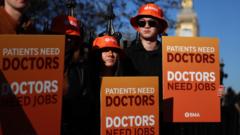
# Resident Doctors End Strike After Government Reaches Agreement on Terms
Resident doctors in the UK have called off their planned strike following a new offer from the government, averting what would have been a significant disruption to healthcare services. The five-day walkout, scheduled to begin Monday at 7:00 AM and run through Friday, has been suspended after negotiations produced terms both sides found acceptable.
The decision to cancel represents a resolution to escalating tensions between junior physicians and government health authorities over working conditions, pay, and staffing levels. Resident doctors, also called junior doctors, form a backbone of the National Health Service, often working extended hours in high-stress environments while managing patient care across multiple departments.
The specifics of the new government offer remain under review by medical representatives, but the willingness of striking doctors to suspend action suggests the proposal addresses core concerns that drove the initial strike authorization. Junior doctor strikes carry particular weight in healthcare systems because their absence directly affects hospital operations, emergency departments, and patient care continuity.
Previous labor actions by resident physicians have highlighted recurring issues: inadequate compensation relative to inflation, excessive working hours that compromise both physician wellbeing and patient safety, and insufficient staffing levels that force remaining doctors to absorb additional caseloads. Research consistently demonstrates that physician burnout and fatigue correlate with higher medical error rates and patient complications.
The timing of this settlement matters for healthcare planning. Hospitals had begun preparing contingency protocols for the potential strike, including rescheduling non-emergency procedures and adjusting staffing arrangements. Cancelling the action this close to implementation suggests both parties recognized the stakes and moved toward compromise rather than allowing disruption to proceed.
Junior doctor unions typically frame these negotiations around workforce sustainability. When resident physicians work excessive hours under resource constraints, retention suffers. Many trained doctors leave the profession or relocate to healthcare systems with better conditions, contributing to staffing shortages that ultimately affect patient access and care quality.
The government's willingness to return to the negotiating table reflects political pressure and public concern about healthcare service reliability. Strikes by medical personnel generate substantial public sympathy because the consequences involve postponed treatments and delayed diagnoses for patients already navigating a strained system.
This resolution sets a precedent for how future labor disputes in healthcare might be handled. When employers and physician organizations find negotiation pathways before strikes begin, both patient care and worker conditions benefit from earlier resolution. The pattern also suggests both sides recognize their interdependence. Governments need functioning healthcare systems, and physicians need sustainable employment terms.
Moving forward, implementation of this agreement becomes critical. The actual impact on resident doctor wellbeing depends on how quickly new terms translate into tangible improvements in working conditions, compensation, and staffing support. Monitoring compliance will be essential for union representatives and healthcare workers alike.