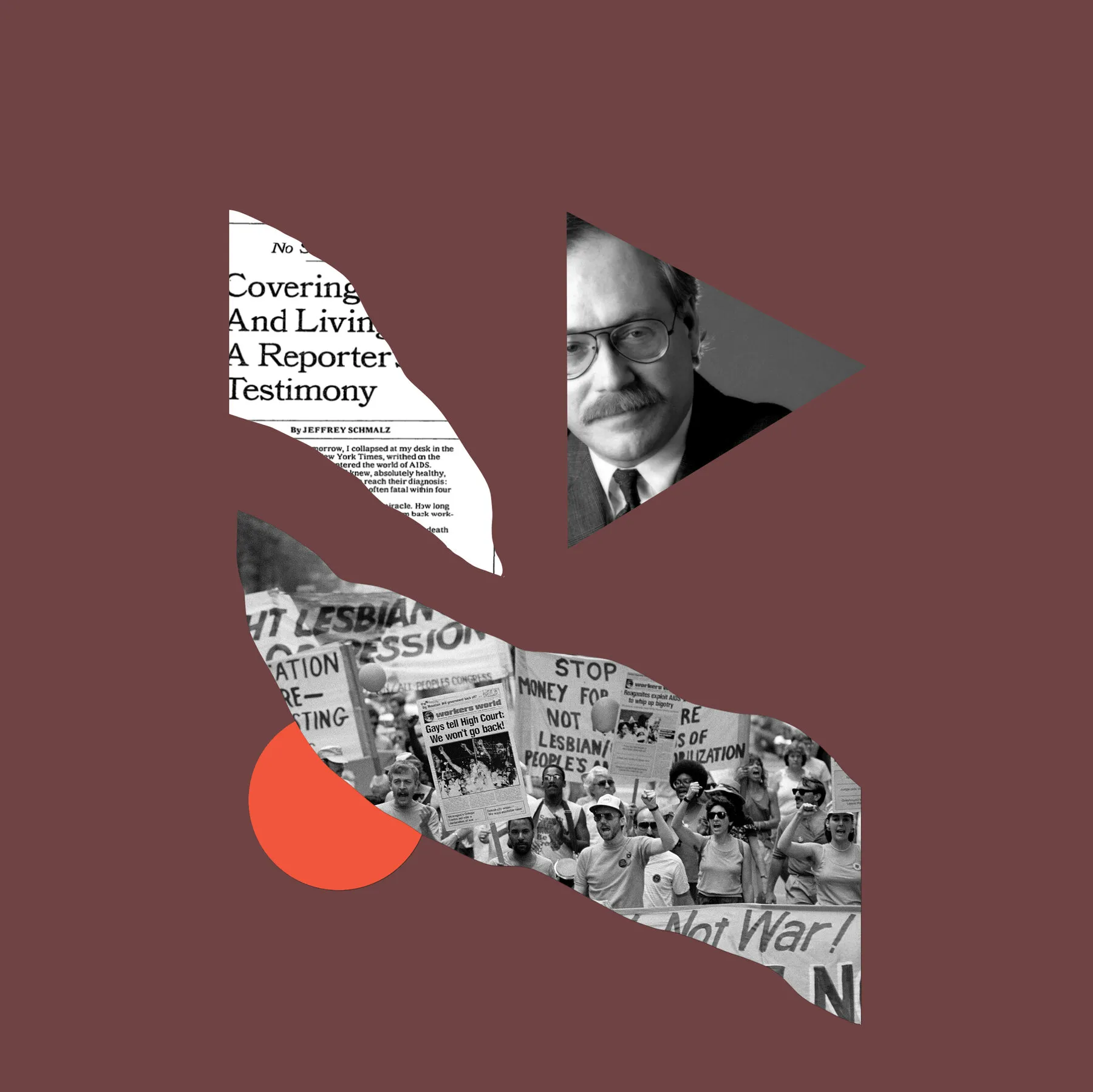
# A Star Reporter Had AIDS. He Wanted to Make It His Beat.
Jeffrey Schmalz became one of American journalism's most unflinching chroniclers of the AIDS crisis by doing what few mainstream journalists dared to do in the late 1980s and early 1990s: he reported the story from the inside, as a person living with the disease.
Schmalz worked as a national correspondent for The New York Times when he received his diagnosis in 1990. Rather than retreat from public life, he channeled his experience into relentless reporting that exposed the gap between political promises and the grim reality facing people with AIDS. His work appeared in the nation's most prominent publications, reaching millions of readers at a moment when the epidemic killed tens of thousands annually and public discourse remained mired in stigma and denial.
What made Schmalz's approach revolutionary was his refusal to separate himself from the story. He wrote from the perspective of someone whose life depended on medical breakthroughs, political action, and drug development timelines that moved with glacial slowness. His reporting captured the anger, fear, and urgency that statistics alone could never convey. He documented how pharmaceutical companies prioritized profit margins over speed, how bureaucrats moved through endless regulatory processes while patients died, and how the mainstream media largely ignored or minimized the crisis.
Schmalz's journalism operated on a principle of radical honesty. He didn't write about AIDS as an abstract public health crisis. He wrote as someone with a personal stake in every delay, every setback, every institutional failure. His byline carried an implicit authority that other reporters could not match. When he described the inadequacy of government response or the suffering in hospitals, readers understood he spoke from lived experience, not distant observation.
The Times published his work knowing that Schmalz's perspective as a person with AIDS gave his reporting unmatched credibility and humanity. He became a visible face of the epidemic at a time when invisibility still defined much of the American response. His presence in the nation's most powerful newspaper challenged readers to reckon with AIDS not as something happening to distant others, but as a crisis affecting Americans they could see, know, and understand.
Schmalz continued reporting despite his deteriorating health, working until the disease demanded he stop. His journalism created a historical record of the epidemic's middle years, a period when treatment options remained limited but activism and advocacy began to shift policy. He documented how long the cavalry took to arrive and whether it came in time to save those already dying.
His work represents a particular moment in American journalism when one reporter's diagnosis became a window into systemic failures that individual suffering alone might never expose. Schmalz's willingness to merge personal stakes with professional standards produced journalism that informed policy discussions, humanized a disease, and held institutions accountable during a public health emergency.