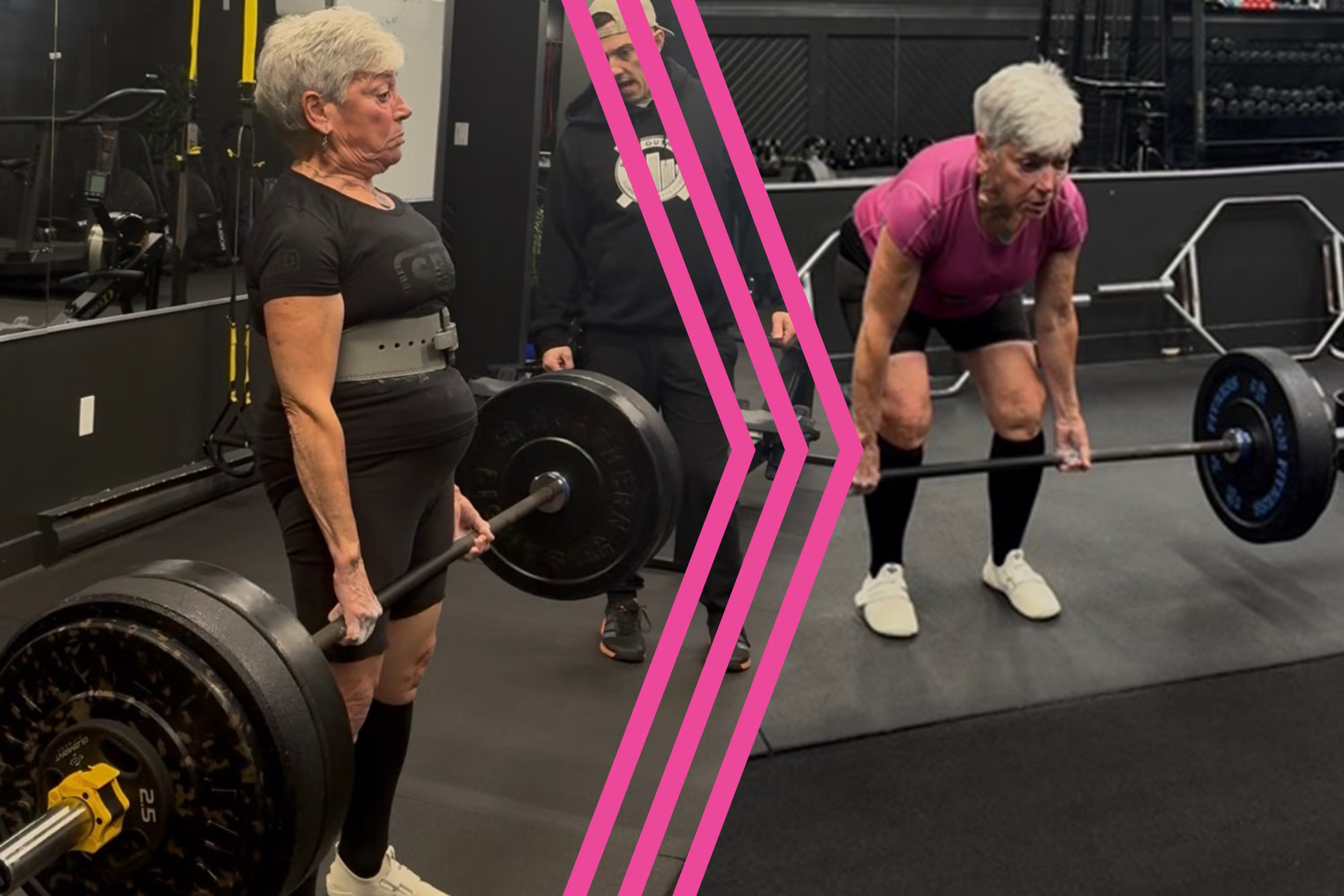
A woman in Nova Scotia began lifting weights at 55 after raising seven children. For 15 years, she worked with various trainers, lifting light weights once or twice weekly but without clear goals or strong commitment.
At 70, her gym's fitness manager Nate Fleming redesigned her training. He introduced progressive overload, the practice of gradually increasing weight lifted each week to build muscle and strength. Fleming added new movements including farmer's carries, deadlifts, and squat variations. She found deadlifts particularly satisfying because of the technique required.
Her attitude shifted almost immediately. She began seeing visible muscle definition and felt more energized. Within a year, she asked Fleming about deadlifting competitions for older women. He confirmed they existed.
She trained for seven months for a powerlifting competition held in March at age 71. She competed in all three lifts: squatting 132 pounds, bench-pressing 71.5 pounds, and deadlifting 242 pounds. She set records in all three lifts for her age and weight category in Nova Scotia.
Her current training consists of three sessions per week with Fleming. Each session follows a four-week block structure. Week one might include 3 sets of 5 reps at moderate weight, with weight increasing in weeks two and three as reps lower. Week four is a deload week for recovery before heavier lifting resumes.
Each workout begins with a main lift when she has the most energy, followed by three or four accessory exercises using lighter weights to strengthen supporting muscles.
She currently squats 160 pounds and deadlifts 265 pounds, five pounds away from the Canadian deadlift record. A lingering shoulder injury keeps her bench press at 71.5 pounds. She sleeps seven to eight hours nightly, aims for 120 grams of protein daily from sources like eggs, chicken, and fish, and focuses on stretching and mobility work on rest days.
She credits Fleming's coaching as central to her transformation, noting his ability to motivate her while respecting her limits. She emphasizes that progress requires balance between challenging her body and allowing recovery through sleep, mobility work, stretching, and walking.