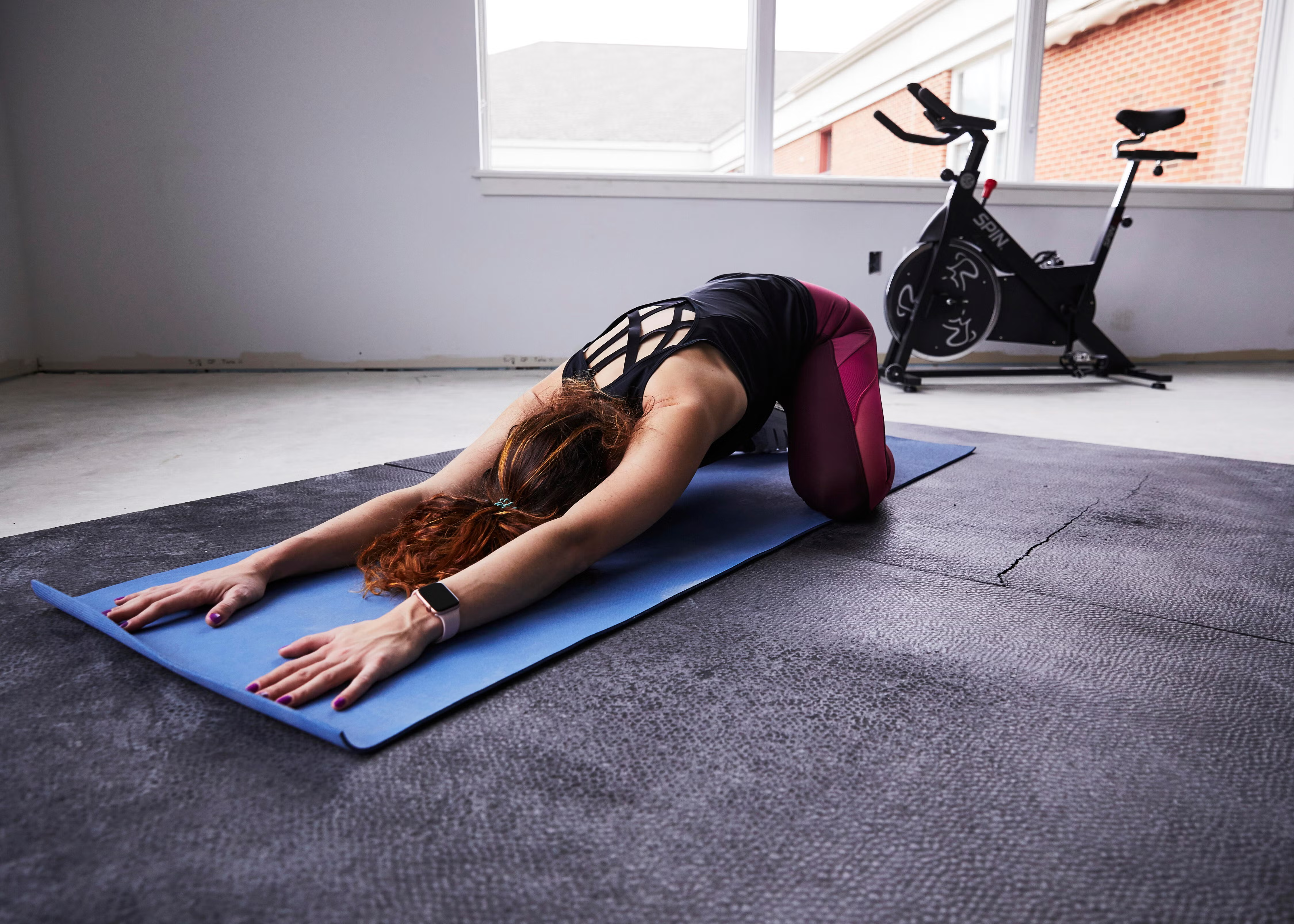
The quadratus lumborum, or QL, is a deep trunk muscle that stabilizes your pelvis and trunk while running. Nicole Haas, PT, DPT, founder of Boulder Physiolab in Colorado, explains that the QL attaches to your lower spine and pelvis and helps you arch your back, bend to the side, and rotate your upper body. Spencer Agnew, PT, DPT, a physical therapist at Sword Health, adds that the QL also assists with breathing when you inhale.
When the QL becomes tight or irritated, you may feel pain in your back or sacroiliac joints, which connect the pelvis and lower spine.
Several factors can irritate the QL. Tight hip flexors rank high on the list. When the psoas, a hip flexor muscle running from your lower back to your hip, shortens, it can tilt your pelvis forward and strain the QL, since both muscles insert into the same vertebrae in your lower back, Agnew explains. Weak glutes also contribute to the problem. Without strong glutes, your knee can collapse inward when you land and your opposite-side hip can dip down, forcing your trunk to side bend and placing more strain on the QL, Haas says. Running downhill can make this worse. Upper-back stiffness creates additional issues. Restrictions in your upper spine or problems in your shoulders, hips, and mid-back can shift extra workload onto the QL.
A tight QL can compromise your running mechanics and reduce your knee lift as you stride, Agnew says. This results in less forward force and an arched-back position when running, which can deliver both reduced performance and increased back pain. A tight QL can also hinder breathing, since it helps you inhale.
Spencer Agnew recommends a three-step at-home series. Perform myofascial release as often as daily if pain limits your ability to run, or two to three times per week for minor pain. Add pelvic tilts and hip hikes before running, then tackle other components afterward. The pelvic tilts help you coordinate pelvic motion, while hip hikes activate your QL. Kettlebell side bends increase blood flow to aid healing. Suitcase carries build strength and stability.
A half-kneeling lunge stretch can lengthen both the QL and tight hip flexors. Do these moves daily or several times per day to mobilize your lower back. However, Haas cautions that if your QL hurts more after stretching or pain returns soon after, stop stretching and seek help instead.
For strengthening, start with one set of moves daily, skipping a day if you feel sore. After about six weeks, reduce to two to three times per week. Exercises that target glutes and pelvic control help train proper running form and unload strain on the QL caused by weak glutes.
Haas recommends booking a physical therapist appointment if you try these at-home approaches and see no improvement after about two weeks. Agnew suggests getting evaluated sooner if pain inhibits your running ability, as early intervention can help prevent further issues.