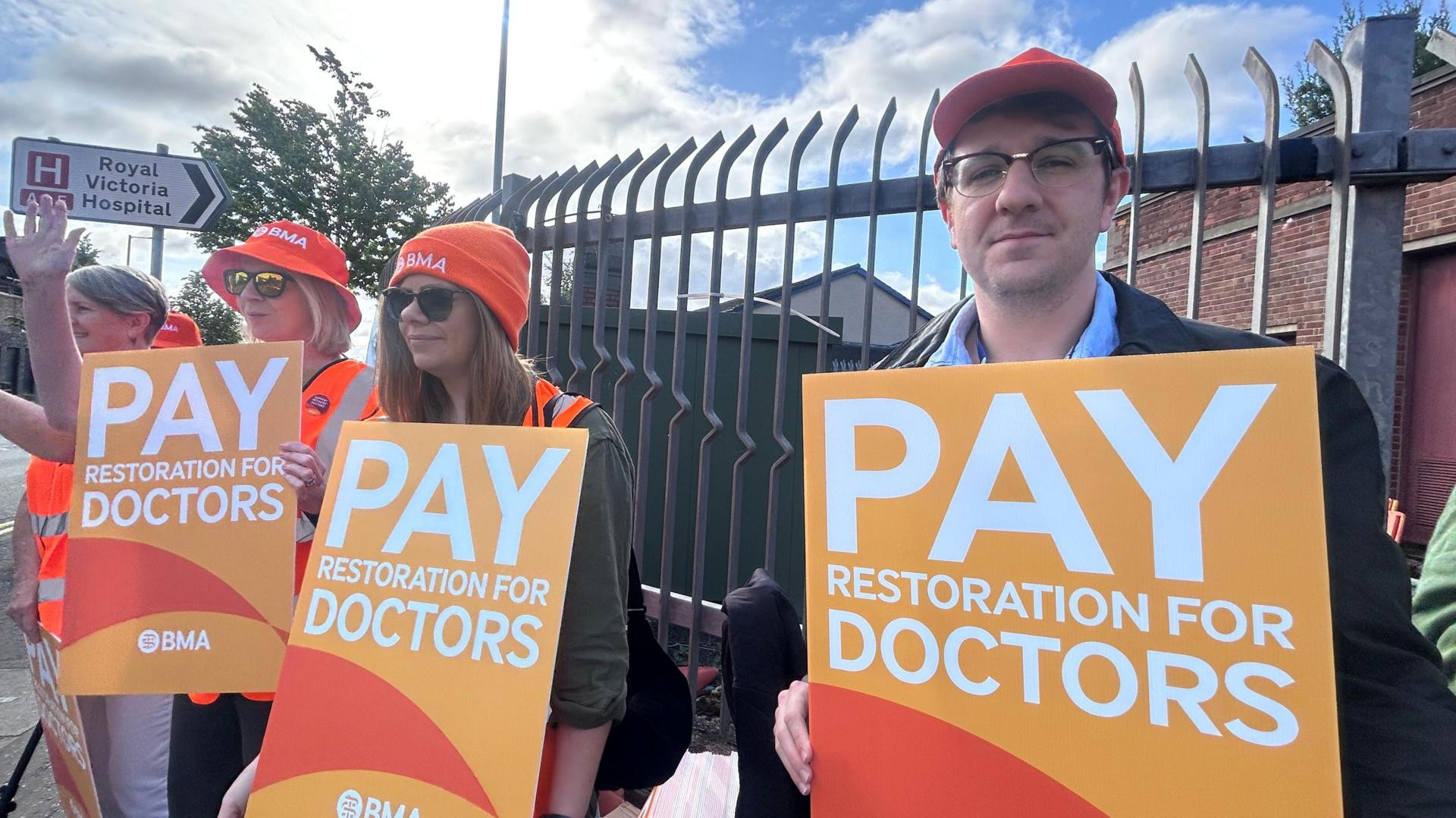
Resident doctors in Northern Ireland began a 24-hour strike on Monday over pay disputes, with industrial action running from 07:00 BST Monday through 06:59 Tuesday. The action follows strikes by consultants and specialist doctors the previous week.
Dr Steven Montgomery, chairman of the BMA's Northern Ireland resident doctors committee, said resident doctor pay has fallen over 20% since 2008. He called the recommended 3.5% pay award insufficient to restore pay to 2008 levels. In a recent survey, over 54% of penultimate and final year medical students in Northern Ireland said they do not plan to work in the region.
Voting results showed 92% of resident doctors and 90% of SAS doctors (fully qualified specialists working permanently in chosen medical areas) voted to strike. The BMA rejected the 3.5% uplift, citing over 18 years of pay erosion.
Picket lines formed at the Royal Victoria Hospital in Belfast, Craigavon Area Hospital, and Altnagelvin Hospital in Londonderry. Dr Helen Kerr, a resident doctor in emergency medicine at Altnagelvin, said doctors felt forced into strike action after years of below-inflation pay increases. She noted the NHS already operates with unsafe staffing levels.
Orla Murray, a resident doctor, is moving to Australia in August to work as a doctor. Adam McConnell, who has worked as a doctor for several years, said "it's the hardest it's been" and that doctors are leaving for better pay and conditions elsewhere.
Health Minister Mike Nesbitt said he remained committed to implementing this year's pay award but could not currently do so without an agreed budget. He stated going beyond 3.5% would have "significant repercussions" for nurses, teachers, police officers, and the public sector workforce.
Dr David Farren, chairman of the BMA's Northern Ireland consultants committee, said there would "undoubtedly be cancellation of operations, of outpatient appointments and elective care" but patient safety would remain prioritized.