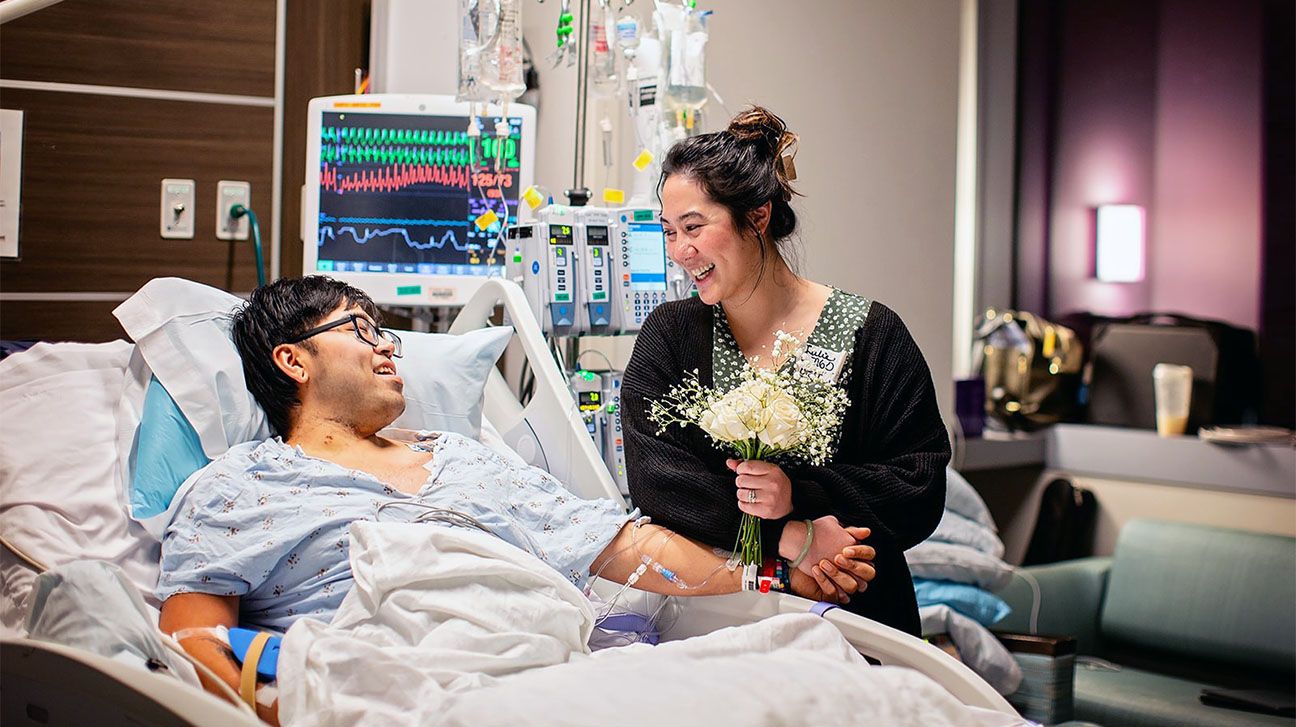
Daniel Phan faced a stark choice. At 34 years old, he sat in an intensive care unit waiting for heart transplant surgery, his organ failing rapidly. Rather than let fear consume those final days before the operation, Phan and his girlfriend Julia made an unconventional decision: they would marry in the ICU.
The couple moved forward with the ceremony just days before Phan's lifesaving transplant. Hospital staff supported the decision, creating space for the wedding to happen within the medical setting where Phan's condition required him to remain. The moment reflected both the urgency of his situation and the couple's commitment to each other despite the gravity of his illness.
Heart failure affects about 6.2 million American adults, according to the Centers for Disease Control and Prevention. The condition develops when the heart cannot pump blood efficiently, depriving organs of oxygen-rich blood. While medications and lifestyle changes help many patients, severe cases like Phan's require transplantation. The waiting period for a donor heart often involves hospitalization in critical care settings.
Phan's story offers a window into life-or-death decision-making for patients facing transplant surgery. Rather than remaining paralyzed by the medical crisis, the couple chose to affirm their relationship during one of life's most vulnerable moments. The hospital's willingness to accommodate the ceremony underscores growing recognition among healthcare providers that emotional wellbeing factors into overall healing.
The couple's decision challenges assumptions about what's possible in medical crisis. Their wedding demonstrated that celebrating life and love need not wait for perfect circumstances. For patients in similar situations, the ICU ceremony offers perspective: major life decisions and human connection remain accessible even when the body demands intensive medical intervention.
THE TAKEAWAY: Heart failure patients facing transplant surgery often must navigate both medical uncertainty and life decisions simultaneously, and meaningful personal moments can occur within critical care settings.