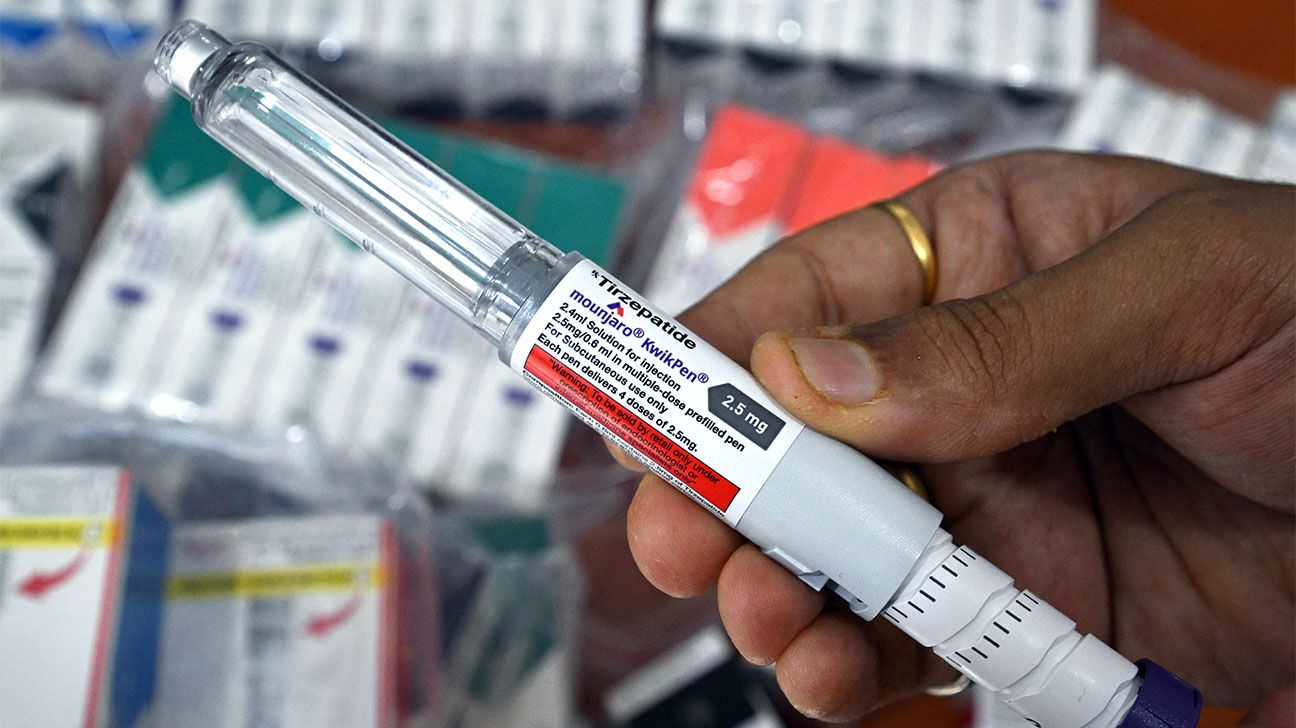
Tirzepatide, the active ingredient in weight-loss drugs Mounjaro and Zepbound, reduces death risk for people living with serious heart conditions, according to new research.
The study examined patients with heart failure or recent heart attacks who were also overweight or obese. Those treated with tirzepatide experienced lower mortality rates compared to those receiving a placebo. The findings extend what researchers already knew about tirzepatide's cardiovascular benefits and suggest the drug protects heart patients beyond its weight-loss effects.
Heart failure affects roughly 6.2 million American adults. Obesity worsens outcomes in these patients, increasing strain on the heart and raising death risk. Weight loss typically improves heart function, but tirzepatide appears to offer protection independent of pounds shed.
The drug works by mimicking two hormones: GLP-1 and GIP. These hormones regulate blood sugar and appetite. The dual-hormone approach helps patients lose weight while also improving how the heart functions. Previous research showed GLP-1 drugs like semaglutide (Ozempic, Wegovy) reduce cardiovascular events. This new data positions tirzepatide as similarly protective, possibly more so.
The research matters because heart disease remains the leading cause of death in the United States. Many patients with heart failure struggle to lose weight despite lifestyle changes, making pharmaceutical options valuable. For these individuals, tirzepatide offers a chance to reduce both weight and death risk simultaneously.
Cardiologists increasingly prescribe these medications for patients with heart conditions and excess weight. The combination tackles two problems at once. Weight loss improves heart function mechanically, while tirzepatide's direct effects on heart tissue provide additional protection.
Access remains a barrier. Insurance coverage varies widely, and medication costs exceed $1,000 monthly without insurance. Still, for eligible patients with serious heart conditions,