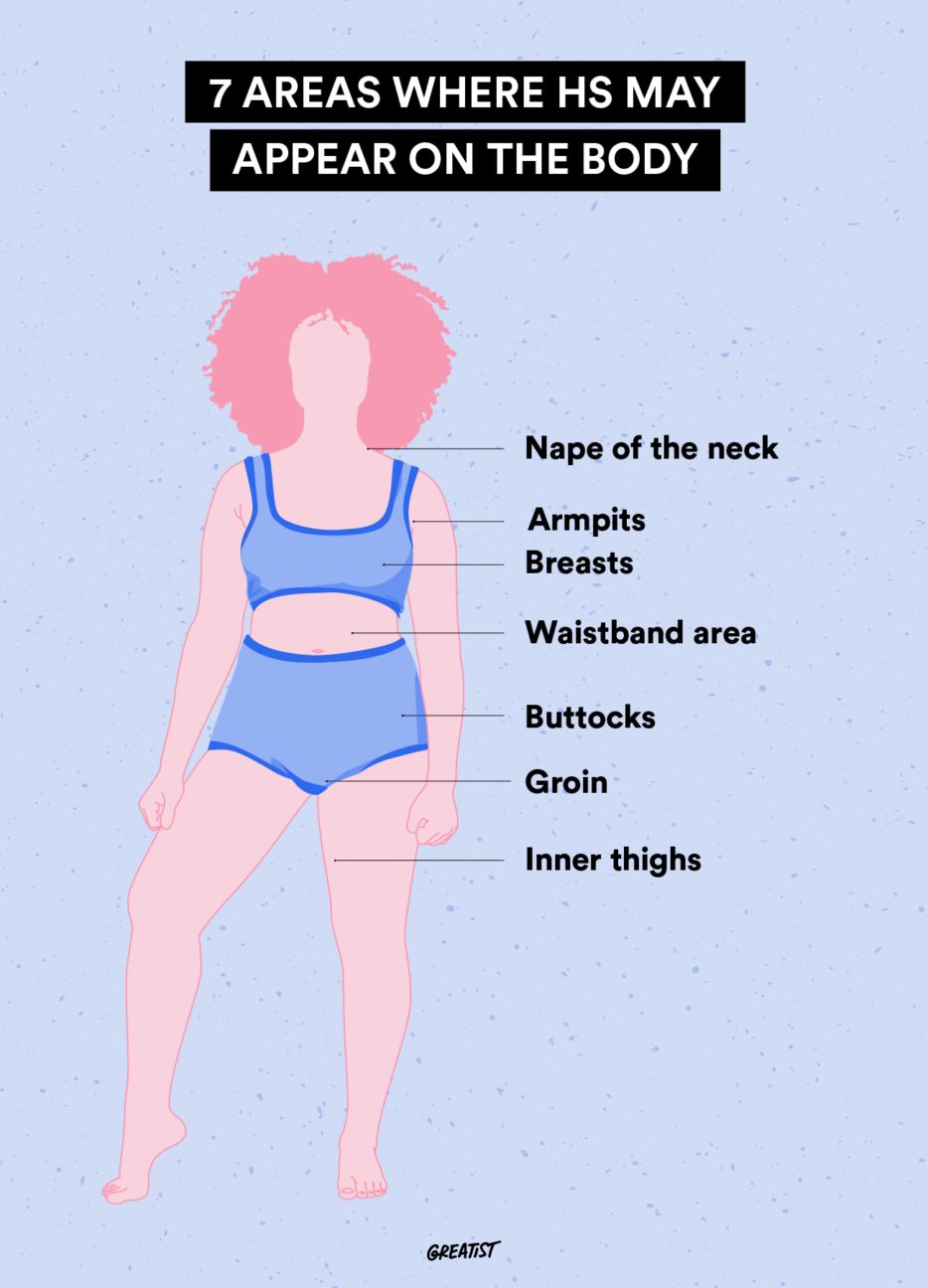
Hidradenitis suppurativa (HS) is a chronic skin condition that causes painful, boil-like lumps in specific body areas. The condition affects hair follicles and apocrine glands, the sweat glands concentrated in certain regions. Unlike simple infections, HS involves complex inflammation that can persist for years.
The seven most common sites where HS develops share one trait: they experience heat, moisture, and friction. Underarms top the list, followed by the inframammary fold under the breasts, the groin, inner thighs, buttocks, the nape of the neck, and the waistband area. Friction from skin rubbing against skin or clothing often triggers flares in these zones.
HS lesions start as nodules but progress into painful abscesses that may drain fluid. Multiple lumps can connect beneath the skin, forming tunnel-like tracts that resist healing. This tunneling distinguishes HS from other inflammatory conditions and explains why treatment remains challenging.
Genetic factors play a role. People with a family history of HS face higher risk. Hormonal fluctuations also influence disease activity, particularly in women, with flares often correlating to menstrual cycles. Environmental triggers like friction, sweating, and stress compound the problem.
The exact cause remains unclear, though researchers suspect a combination of immune dysfunction, bacterial factors, and follicular obstruction. HS is not contagious and cannot spread from person to person.
Early recognition matters. Many people experience years of misdiagnosis before receiving a proper diagnosis, delaying effective treatment. If you notice recurrent, painful lumps in friction-prone areas that don't resolve with standard acne treatments, consult a dermatologist. Early intervention with antibiotics, biologics, or surgical options can reduce scarring and improve quality of life.