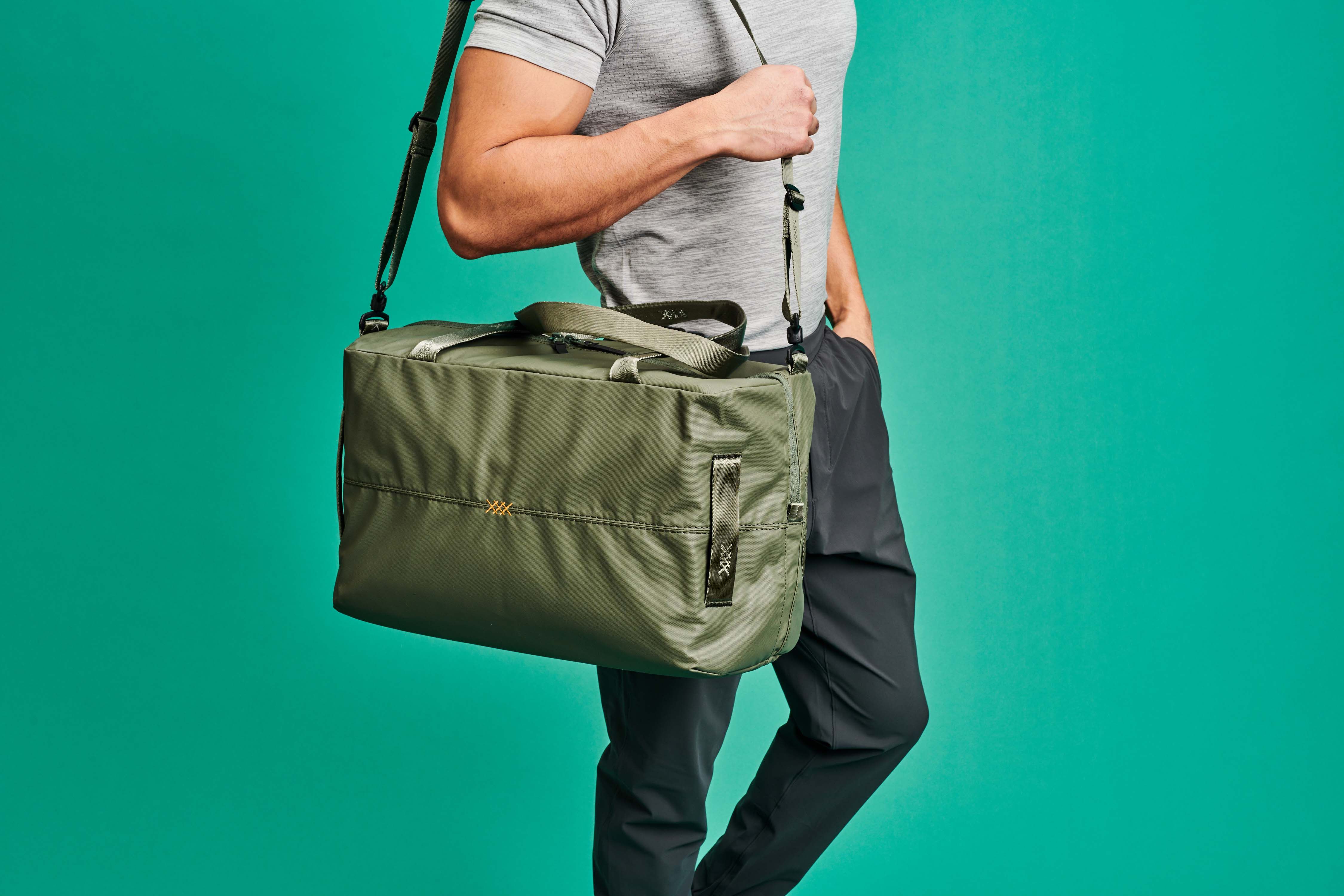
We tested eight gym bags across durability, organization, comfort, and real-world usability to find the best options for men who work out regularly.
Lululemon's offering dominated our testing. The bag balances sleek design with practical compartments that keep shoes, clothes, and accessories separated without bulk. The shoulder straps distribute weight evenly, preventing neck strain during commutes to the gym. Reviewers praised its water-resistant exterior and reinforced stitching at stress points.
KNKG delivered solid performance at a lower price point. Its modular design lets users customize compartments based on their needs, whether they're carrying swim gear or weights. The bag's ventilated shoe compartment eliminates odor buildup, a practical touch many gym-goers appreciate.
Mack Weldon rounded out the top tier with a minimalist aesthetic that still accommodates full workout gear. The bag compresses efficiently in tight spaces, making it suitable for office workers who transition from desk to gym. Its durable nylon construction withstood repeated loading and unloading without fraying.
We tested each bag through five gym sessions, evaluating how straps held up under loaded weight, whether zippers snagged, and if compartments stayed organized after heavy use. We also assessed whether bags smelled after storing sweaty clothes and if materials showed wear.
Three factors matter most when choosing a gym bag. First, consider your commute. Bags with padded shoulder straps reduce fatigue during longer walks or transit rides. Second, think about storage needs. Dedicated shoe compartments and ventilated sections prevent cross-contamination between clean and soiled items. Third, prioritize material quality. Reinforced stitching and water-resistant fabrics last longer through regular gym sessions.
Price varies significantly. Budget options start around $50, while premium bags exceed $200. Mid-range