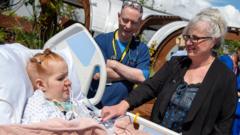
King's College Hospital in London has opened an intensive care ward on its rooftop, marking an unusual experiment in patient recovery. The unit will monitor how exposure to outdoor conditions affects the healing of critically ill patients.
Researchers and clinicians at the hospital designed this outdoor ICU to test a hypothesis backed by growing evidence. Studies show that access to natural light, fresh air, and outdoor views accelerates recovery in hospitalized patients. A landmark study published in JAMA Internal Medicine found that patients with windows facing natural settings experienced shorter hospital stays and required less pain medication than those in interior rooms.
The rooftop location provides ventilation and natural light that traditional indoor ICU wards cannot match. For patients recovering from severe illness, these environmental factors matter. Florence Nightingale's 19th-century nursing principles emphasized fresh air and daylight as healing agents. Modern research validates what she knew intuitively.
The hospital will track specific metrics: length of stay, pain medication requirements, infection rates, and patient-reported psychological outcomes. The setup includes isolation capabilities to maintain infection control standards while delivering outdoor exposure.
Critically ill patients typically spend weeks in windowless rooms under artificial lighting. The psychological toll compounds the physical trauma. One patient quoted in reporting expressed the simple but profound reality: "I forgot what it's like to be outside."
This rooftop ward recognizes that recovery involves more than clinical interventions. Temperature regulation, air quality, circadian rhythm alignment through natural light, and the visual stimulation of outdoor space all support physiological healing.
The initiative draws on research from architects and environmental psychologists who document how natural environments reduce stress hormones like cortisol. In ICU settings where patients face extreme physiological stress, any factor that lowers stress may accelerate recovery.
King's College's experiment addresses a neglected dimension of intensive care. While medications and monitoring equipment save lives, the environment where healing occurs deserves