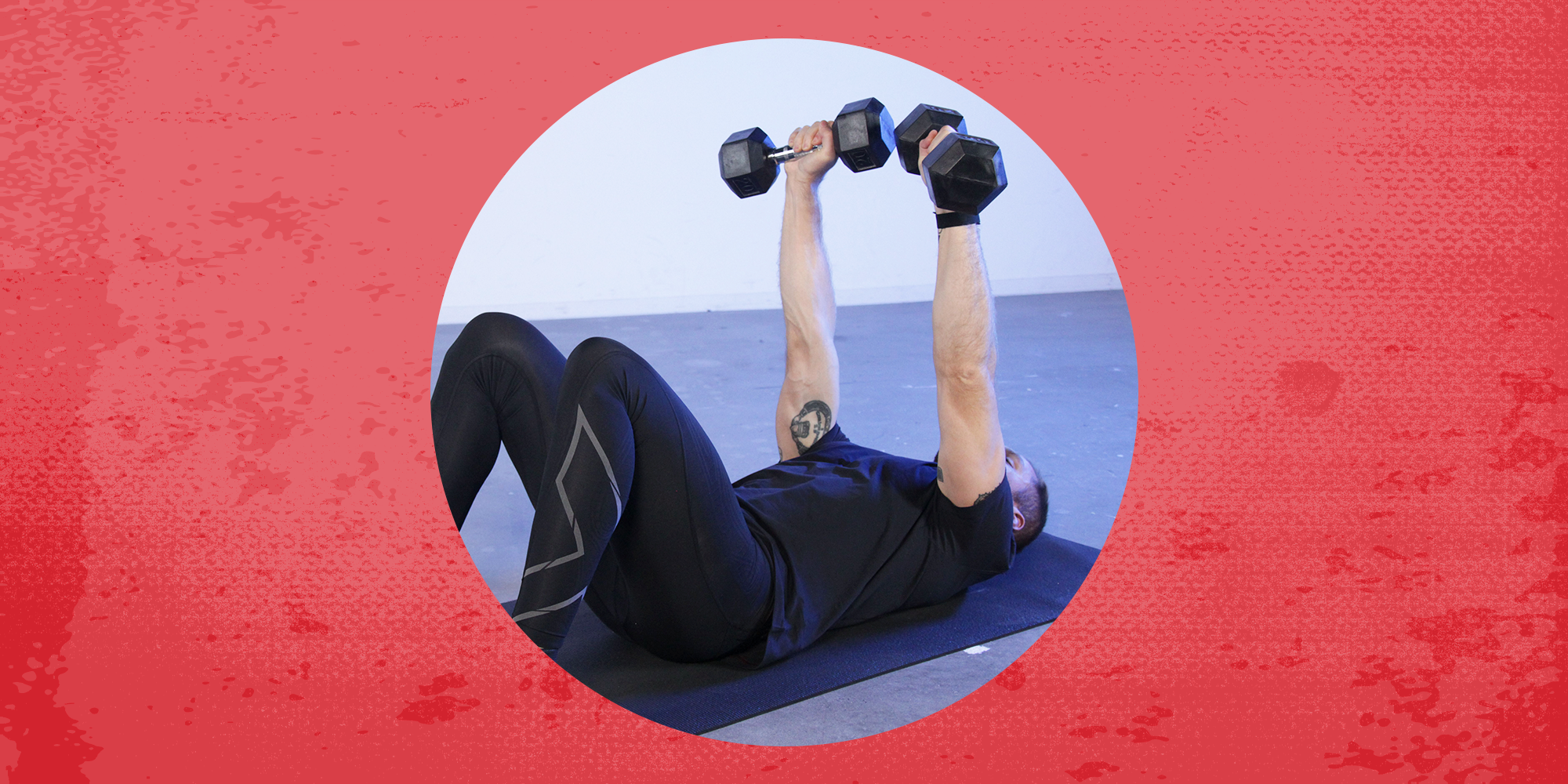
The floor press offers a practical alternative to traditional bench pressing that builds chest strength while reducing shoulder strain. This ground-based movement limits the range of motion by stopping your elbows when they contact the floor, removing excessive stress from the shoulder joint.
Unlike the barbell bench press, which requires stabilizer muscles to control the weight through a full range of motion, the floor press provides a mechanical advantage. Your elbows rest on the ground at the bottom of the movement, eliminating the vulnerable "bottom-out" position that stresses the anterior shoulder capsule. This makes the exercise particularly useful for people dealing with shoulder impingement or those returning from shoulder injuries.
The floor press also transfers directly to bench press performance. Strength coaches use it as a supplemental lift to build raw pressing power in the chest and triceps without the added shoulder stress. The exercise emphasizes the lockout portion of the press, the top half where you drive the weight upward, which carryover translates to heavier bench presses.
To perform the floor press correctly, lie on your back with knees bent and feet flat on the floor. Hold a barbell or dumbbells at chest height with elbows at roughly 45 degrees from your body. Press the weight upward until your arms straighten, then lower with control until your elbows lightly touch the floor. This tactile cue prevents you from overextending the shoulder.
Beginners should start with dumbbells to allow individual arm strength to develop equally. This unilateral approach also forces your core to stabilize properly. Aim for 3 to 4 sets of 6 to 10 repetitions using moderate weight that challenges you without compromising form.
The floor press fits well into chest-focused training days or as a secondary pressing movement after bench press work. Athletes and lifters recovering from shoulder issues can use it as