# Building Muscle After 50: Three Evidence-Based Strategies
Building muscle over 50 remains entirely possible despite age-related changes in hormone levels and protein synthesis. Research from the American College of Sports Medicine confirms that older adults respond to resistance training with measurable strength and muscle gains comparable to younger populations when training intensity and consistency remain high.
Three core strategies optimize muscle building in this life stage.
First, prioritize progressive overload. Gradually increasing weight, reps, or sets forces muscles to adapt and grow. Unlike younger lifters who can tolerate rapid progression, adults over 50 benefit from smaller increments applied consistently. Adding 2.5 pounds every two weeks beats aggressive jumps that risk injury.
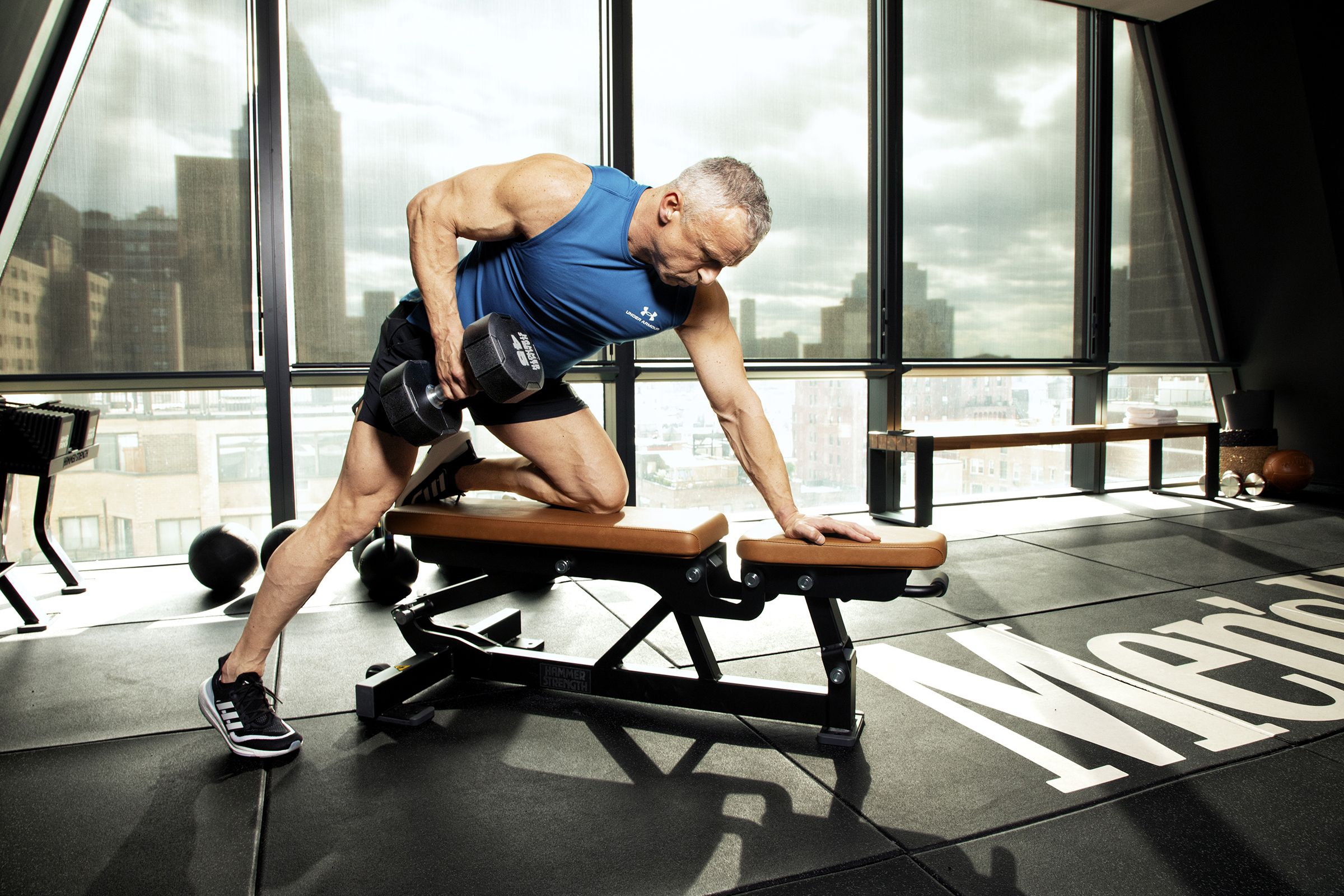
Second, focus on compound movements. Squats, deadlifts, bench presses, and rows recruit multiple muscle groups simultaneously, triggering greater hormonal responses and metabolic activation. These exercises deliver efficiency for those managing recovery time and joint health. Compound movements also improve functional strength for daily activities like carrying groceries or playing with grandchildren.
Third, ensure adequate protein intake and recovery time. Adults over 50 require approximately 1.2 to 1.6 grams of protein per kilogram of body weight daily to support muscle protein synthesis, according to research published in the Journal of Applied Physiology. Recovery becomes non-negotiable. Two to three days of rest between working the same muscle groups allows older muscles adequate adaptation time.
The biology works in your favor. While testosterone production naturally declines with age, resistance training triggers growth hormone release and improves insulin sensitivity, both supporting muscle development. Studies show that 50-year-olds who train consistently develop muscle quality comparable to sedentary 30-year-olds.
Success at this stage requires patience and consistency over intensity. Sustainable, progressive training beats sporadic aggressive efforts. A 45-minute session