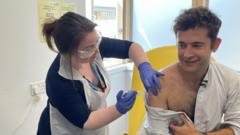
Ed Hunt, a 37-year-old from the United Kingdom, became the first person to receive an experimental Ebola vaccine as part of a clinical trial launched in response to the ongoing outbreak in the Democratic Republic of Congo. Hunt volunteered after learning about the severity of the crisis through news coverage of the deadly epidemic.
The vaccine represents a new approach to Ebola prevention and builds on previous vaccine development efforts that emerged following the 2014-2016 West African epidemic. Researchers have worked to create immunizations that could protect healthcare workers, at-risk populations, and those in outbreak zones from infection with the Ebola virus, which kills up to 90 percent of infected people in some outbreaks.
Clinical trials for experimental Ebola vaccines typically follow rigorous safety protocols before expanding to larger populations. Volunteers like Hunt undergo extensive screening and monitoring to ensure the vaccine triggers an appropriate immune response without serious adverse effects. The trial design aims to generate data on both efficacy and safety profiles that regulatory agencies require for potential approval.
Hunt's decision to participate reflects the growing trend of informed volunteers stepping forward during public health emergencies. His involvement demonstrates community engagement in vaccine development during active outbreak situations, where there remains urgent need for effective preventive tools.
The DRC outbreak underscores why Ebola vaccine development remains a public health priority. Healthcare systems in resource-limited settings face particular challenges when responding to viral hemorrhagic fevers, making accessible, effective vaccines essential for outbreak control.
This trial marks progress in translating laboratory research into real-world applications for one of the world's deadliest pathogens. Results from early volunteer participants like Hunt will inform whether the experimental vaccine advances to larger efficacy studies and eventually broader deployment in affected regions.