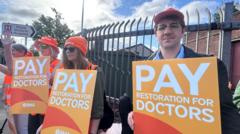
# Resident Doctors Strike Over Pay, Triggering Healthcare Disruptions
Resident doctors in the UK have initiated strike action over compensation disputes, prompting the British Medical Association (BMA) to warn of widespread service interruptions across the National Health Service.
The BMA stated that the strike will "undoubtedly" result in cancellations of surgical operations, outpatient appointments, and elective procedures. However, the organization emphasized that emergency care and patient safety protocols will remain intact throughout the labor action.
This development reflects growing tensions between junior physicians and health service leadership regarding remuneration. Resident doctors, who represent a substantial portion of the NHS workforce, have escalated their dispute through industrial action after negotiations reached an impasse.
The timing of the strike creates operational challenges across hospital networks. Elective surgeries, which include planned procedures that are not emergencies, typically face postponement during labor disputes. Outpatient clinics, where patients receive follow-up care and consultations, will also experience disruptions. The BMA's acknowledgment of these cancellations underscores the scale of the action's impact on routine healthcare delivery.
The distinction between elective and emergency care remains central to the BMA's position. The union has prioritized maintaining critical patient protection systems, indicating that residents will continue to staff emergency departments, intensive care units, and other acute services where immediate medical intervention prevents serious harm or death. This selective approach balances workers' rights advocacy with healthcare system stability.
The resident physician workforce performs essential functions in UK hospitals. These doctors provide direct patient care, participate in training rotors, and contribute to research initiatives. Their collective action demonstrates that compensation concerns have reached a threshold where labor disruption becomes the chosen negotiating tool.
Healthcare systems across multiple NHS trusts will need to implement contingency planning immediately. Hospital administrators typically implement triage protocols during strikes, prioritizing emergency cases and time-sensitive procedures while deferring routine operations. Patients with scheduled appointments may receive notifications about postponements and rescheduling timelines.
The strike represents the latest in a series of labor disputes within the NHS over working conditions and pay. Previous industrial actions by different medical professional groups have established patterns where service disruptions eventually prompt renewed negotiations. The BMA's public communications strategy, which acknowledges disruptions while emphasizing safety prioritization, attempts to maintain public support for resident physicians while managing expectations about service impact.
The duration of the strike remains to be determined. Previous BMA-led actions have ranged from single-day walkouts to extended campaigns spanning multiple weeks. Extended strikes create cumulative backlogs in surgical schedules and specialist consultations, potentially affecting patient outcomes through delayed diagnosis and treatment of non-emergency conditions.
The dispute occurs within broader NHS context of staffing shortages, burnout among medical professionals, and system-wide resource constraints. Resident doctors cite compensation levels that have not kept pace with cost-of-living increases, workload demands, and career progression challenges as primary grievances.
Resolution typically requires negotiated agreements addressing specific pay scales, conditions of service, or career development pathways. Previous settlements have involved government funding increases or restructured compensation packages designed to address workforce retention concerns.