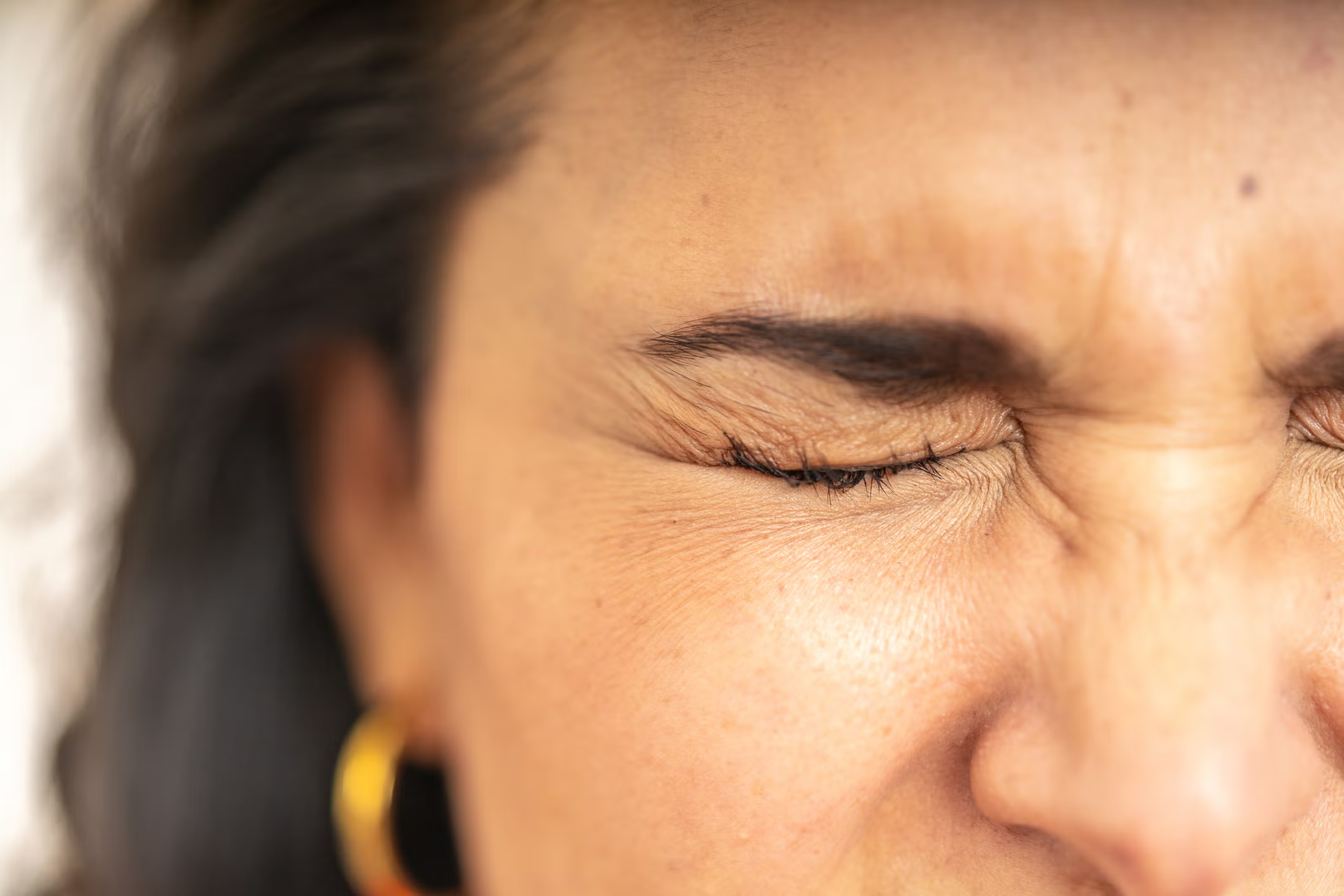
# Why Menopause Can Cause Dry, Watery Eyes—and the Simple Trick That's Surprisingly Effective
Menopause brings a cascade of physical changes, and many people discover an unexpected symptom: eyes that feel simultaneously dry and watery. This paradoxical combination affects roughly 60 percent of menopausal women, according to research published in Menopause, the journal of The North American Menopause Society.
The culprit is hormonal. During menopause, estrogen and progesterone levels plummet, and these hormones regulate tear production and composition. The tear film that protects the eye's surface contains three layers: oil, water, and mucus. When hormones drop, the glands that produce tears shrink, and the tears themselves become less stable. This creates an unstable tear film that breaks apart rapidly, leaving the eye surface exposed.
Paradoxically, the eye responds to dryness by producing excess watery tears. These reflex tears lack the oil and mucus layers that keep them on the eye, so they simply spill down the cheek rather than lubricating the surface. This explains why menopausal people often experience both dry eyes and tearing simultaneously.
Dr. Yuna Rapoport, an ophthalmologist at Manhattan Eye Specialists, explains that this condition, called meibomian gland dysfunction, commonly develops during perimenopause and menopause when hormonal shifts accelerate. The meibomian glands line the eyelid margins and secrete the protective oil layer that prevents tear evaporation.
A surprisingly effective intervention exists: warm compresses applied to the eyelids. Heat dilates the meibomian glands and helps liquefy the oils they produce, allowing them to spread evenly across the tear film. Research published in the International Journal of Ophthalmology found that patients who applied warm compresses for five to ten minutes twice daily experienced significant improvement in both dryness and tearing symptoms within two weeks.
The technique requires minimal equipment. A clean washcloth moistened with warm water, held gently against closed eyelids, works well. Alternatively, commercially available heated eye masks maintain consistent temperature for the recommended duration. The key is consistency. Daily application of warm compresses combined with gentle eyelid massage helps restore meibomian gland function.
For those seeking additional relief, preservative-free artificial tears containing lipids support the tear film's stability. Ophthalmologists often recommend omega-3 supplementation to support tear composition from within. Omega-3 fatty acids improve the quality of meibomian gland secretions, according to research from Harvard Medical School.
Hormone replacement therapy addresses the root cause, though it carries its own considerations that warrant discussion with a healthcare provider. For those unable or unwilling to pursue HRT, lifestyle modifications and topical treatments provide meaningful relief.
The takeaway for menopausal people experiencing dry, watery eyes: this symptom responds well to evidence-based interventions. A five-minute daily commitment to warm compresses often resolves what many assume they must simply endure.