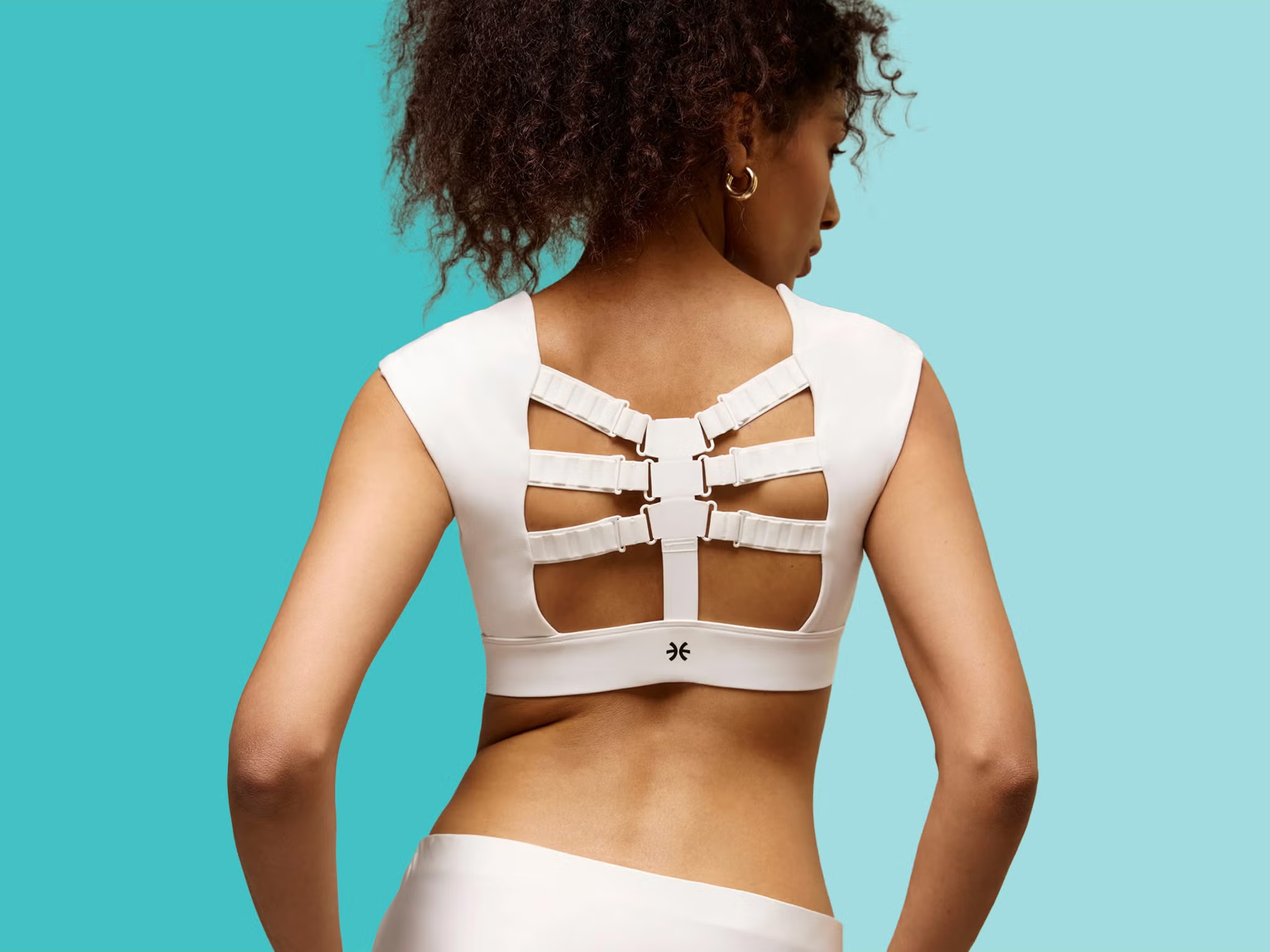
# Physical Therapists Share Their Top Posture-Correcting Bra Picks
Poor posture costs your body. Forward head position, rounded shoulders, and collapsed chest posture compress your lungs, strain your neck and upper back muscles, and contribute to chronic pain patterns that accelerate over time. Physical therapists increasingly recognize that a supportive bra serves as a foundational tool in posture correction, not merely a comfort item.
The right bra can anchor your shoulders back, lift your ribcage, and reduce the downward pull that weakens your postural muscles. This matters because your body adapts to whatever position you hold most. If you spend eight hours daily in a slouch, your anterior chest muscles tighten while your upper back muscles weaken and lengthen. A supportive bra interrupts this pattern by providing external support while you build the strength to maintain good posture independently.
Physical therapists recommend specific features when selecting a posture-supporting bra. The band should sit level across your back, neither riding up nor digging in, because a properly fitted band distributes weight evenly across your ribcage. Straps matter enormously. They should sit at the edge of your shoulder, not slipping down or pulling toward your neck. Cups need sufficient support to prevent breast tissue from pulling your torso forward, which forces your shoulders to compensate by rounding.
The Prevention article identifies five bras that clinicians frequently recommend to patients. Each option addresses different body types and comfort needs, recognizing that posture support is personal. Some patients require maximum structure and lifting capacity. Others prioritize breathability for all-day wear. A few need minimal wire designs that still deliver postural benefit.
What makes these recommendations clinically sound is that physical therapists evaluated them against functional criteria, not fashion trends. They tested whether the bra actually maintains shoulder positioning, whether the band remains stable during movement, and whether patients reported decreased upper back and neck tension after wearing them.
The posture-bra connection extends beyond immediate comfort. Research in biomechanics shows that proper shoulder positioning increases lung capacity, improves breathing efficiency, and reduces compensatory strain on your neck. Better posture also influences your mood and energy levels. Studies demonstrate that upright positioning activates different neural pathways than slouching, potentially affecting everything from confidence to oxygen availability to how your nervous system regulates stress.
However, a supportive bra alone does not fix posture. Physical therapists emphasize that the bra works best as part of a complete approach that includes postural awareness training, upper back strengthening exercises, and chest stretching. The bra provides external support while you build internal muscular endurance.
For people experiencing chronic neck pain, upper back tension, or forward head posture, a clinically recommended supportive bra represents a practical first intervention. It costs less than physical therapy sessions, requires no learning curve, and delivers immediate postural support. Over weeks and months, as you strengthen your postural muscles and develop better movement habits, you can gradually depend less on external support while maintaining the alignment gains you achieved.